Cuban vs New World Cigars in 2025: Flavour, Scarcity & Hype
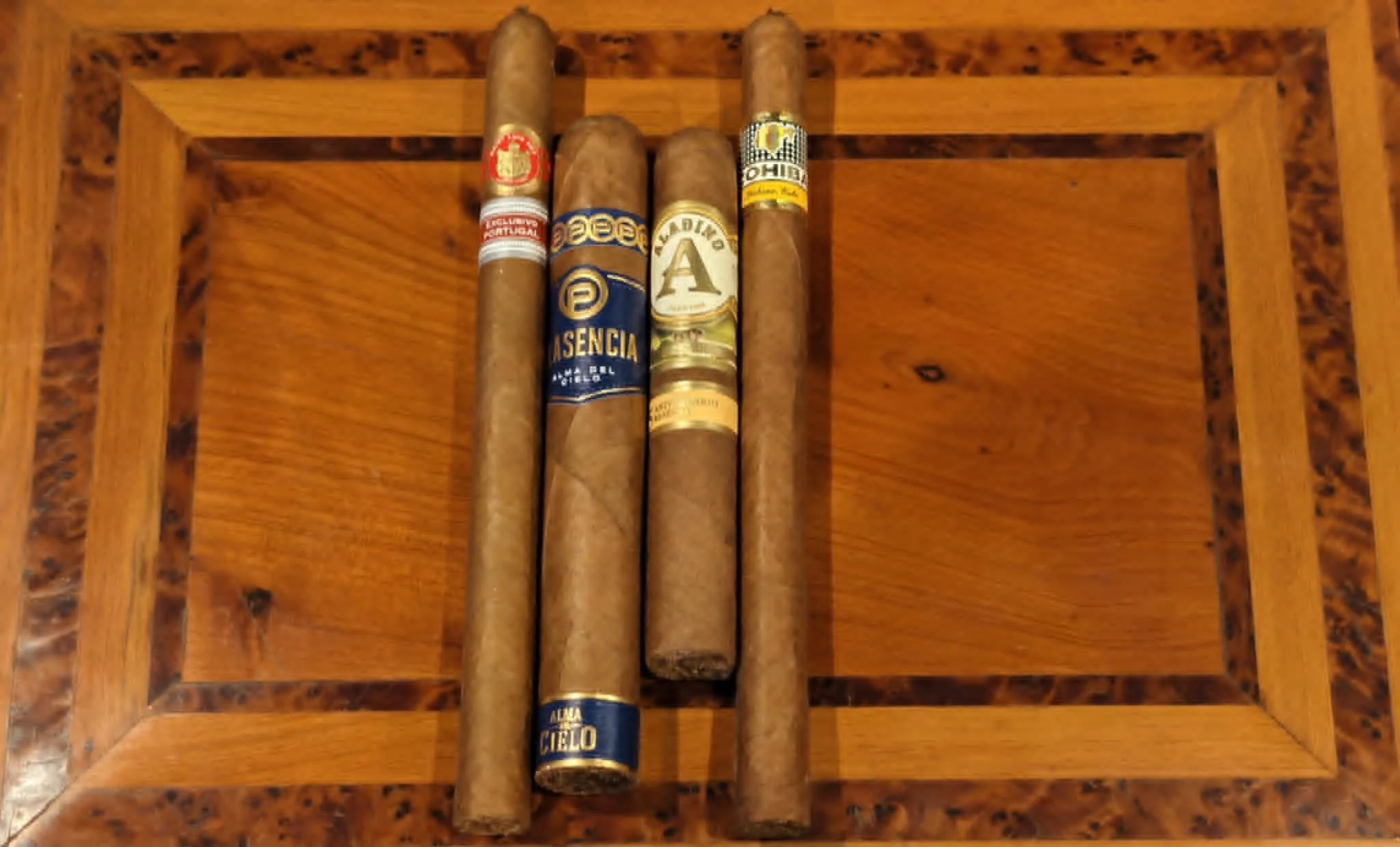
If you’ve been around cigars long enough, you’ve seen this argument turn into a personality test. “Cuban or New World?” gets treated like football teams, when the truth is way simpler: in 2025, they’re two different experiences living under two very different realities. One side is heritage, romance, and a flavour signature that still feels like its own language. The other side is consistency, range, and a market that moves fast, experiments hard, and usually shows up on time.
And then there’s the elephant in the room: scarcity and hype have become part of the Cuban “flavour” whether we like it or not. Demand is strong, prices keep climbing, and the fakes are everywhere. Even the producers have leaned into authentication tech as a response, which tells you how big the problem has become.
So if you’re trying to decide what to buy (or what to cellar), I don’t think the right question is “which is better?” The right question is “what do I want tonight: the Cuban experience, or the New World experience?” Because they scratch different itches.
Flavour, Strength, and Why They Feel So Different
Cuban flavour has a shape. Even when you can’t describe it perfectly, you know it when it hits: that elegant dry sweetness, toasted cedar, soft mineral earth, a kind of fragrant “tobacco perfume” that lives more in aroma than raw strength. A lot of Cuban cigars don’t smack you in the face; they pull you in. The best ones feel balanced and aromatic rather than engineered to be intense. When they’re on, they’re effortless.
New World cigars, especially in the last decade, have embraced range and volume. They’re not shy about richness: darker wrappers, sweeter profiles, bolder spice, thicker smoke. You’re more likely to get chocolate, espresso, syrupy sweetness, pepper, and “big” flavours early. And you see a lot more deliberate blending for impact: the way makers use stronger upper-priming leaves and heavier fermentation to build body and punch is part of the modern style.
That doesn’t mean Cubans are weak or New World is crude—both can be refined and both can be powerful—but the baseline is different. If you’re new to cigars, this matters because a Cuban “medium” often feels like an aromatic medium, while a New World “medium” can still hit like a truck depending on the blend and how much ligero is driving it.
There’s also a consistency point people don’t always like hearing. On average, New World production is easier to buy and easier to repeat. If you fall in love with a New World cigar in 2025, there’s a decent chance you can actually find it again next month and it will taste recognisably similar. With Cubans, even when they’re authentic, you can run into batch swings, storage history swings, and simple “today this box is magic, next box is fine.” That unpredictability is part of the romance for some people…and part of the frustration for others.
Scarcity, Price, Fakes, and the Real-World Buying Experience
This is where 2025 really splits the room.
Cuban cigars have become more expensive year after year, and the market has been openly moving in that direction—more luxury positioning, more “premiumisation,” more scarcity-driven pricing. There are published price lists showing broad increases going into 2025 (even if some of them are relatively modest compared to earlier jumps). And at the same time, Habanos has reported record sales and strong demand growth, particularly in Asia, with China a major driver by value.
That combination—higher demand plus constrained supply—creates three predictable outcomes: availability feels random, hype becomes a currency, and fakes flood the gaps.
The fake problem isn’t a small side-issue anymore. It’s big enough that the industry has been pushing harder on modern authentication measures, including expanded digital approaches and NFC-style verification on some high-value products. In plain language: if you’re shopping Cuban in 2025 outside well-established channels, you should assume the market is booby-trapped. The “too good to be true” deals usually are. And the worst part is that fakes aren’t always obvious unless you’ve handled a lot of real boxes.
New World has its own hype machine—limited editions, annual releases, small-batch drops—but the buying experience is usually less stressful. Availability is better, distribution is clearer, and while counterfeiting exists, it’s not the same “global fake economy” vibe you see around Cubans. The frustration you get with New World is different: you’ll see a cigar hyped to the moon, buy it, and realise it’s just “good” rather than life-changing. With Cubans, the frustration is often not even getting the chance to buy the thing at a sane price, or wondering if what you bought is real.
Shipping and legality add another layer, depending on where you live. For many smokers, New World simply means fewer headaches. You can order, you can replace, you can build a rotation. Cuban buying can feel like hunting—not always fun hunting, either.
And when it comes to aging potential, this is where the debate gets spicy. The classic argument is that Cubans “need age” more often, while New World cigars are “ready” sooner. There’s truth there, but it’s not a law. Many Cuban cigars do shine with time as sharper edges settle and the aroma becomes more integrated. But plenty of New World cigars also transform beautifully over 3–10 years, especially blends with real structure and well-fermented tobacco. The bigger point is this: age doesn’t save a cigar that’s poorly stored, over-humidified, or uneven to begin with. Scarcity makes people romanticise age, but storage quality is still the boss.
If You Like This Cuban, Try This New World
This is the part people actually want, because it’s not theory—it’s “what do I smoke when I can’t find what I want?”
If you love the classic creamy, cedar-forward Cuban profile—think soft sweetness, fine aroma, zero aggression—then aim New World in the direction of refined, lighter-bodied, elegant blends rather than “dark and powerful.” You’ll generally be happier with cigars built around smoother wrappers and balanced filler rather than max-strength marketing.
If you’re a Montecristo No. 2 kind of smoker—classic structure, cedar, coffee, a touch of sweetness, an aromatic punch on the retrohale—your New World comfort zone is often a well-made, medium-bodied Nicaraguan or Dominican that’s built for balance rather than brute force. You’re looking for that “clean” mid-palate and a finish that stays woody and nutty instead of turning into black pepper and tar.
If you’re chasing Cohiba-style elegance (that polished, perfume-like aroma more than raw intensity), the best swaps tend to come from brands that prioritise refinement: cleaner fermentation, smoother blends, no heavy rough ligero edge. You want cigars that feel “composed,” where the aroma does the talking.
If you love Partagás or Bolívar-style weight—deeper earth, darker spice, that older-school “serious cigar” feeling—New World actually gives you a huge playground. The trick is choosing blends that are rich but still structured, so the cigar stays interesting rather than just loud. This is where darker wrappers and heavier fermentation can be brilliant, as long as the cigar doesn’t become a nicotine wrestling match.
And if what you really love is the Cuban “aging journey,” then you can absolutely get that from New World too—just be picky. Choose cigars that already show balance young, then let them sit. The best candidates are the ones that feel slightly sharp or slightly disconnected fresh, but clearly have quality leaf and good construction. Over time they tend to knit together into something smoother and deeper rather than simply fading.
The big takeaway for me in 2025 is this: Cuban cigars are still special, but the buying experience has become part of the price. You’re paying not only for flavour and heritage, but for scarcity, uncertainty, and the stress tax of authenticity. New World cigars, meanwhile, are giving smokers more variety, better repeatability, and fewer headaches—while still producing genuinely world-class cigars that can compete on quality, not just convenience.
So I don’t treat it like a war. I treat it like two different moods. Some nights you want that Cuban perfume, that old-world elegance, that feeling of smoking a piece of culture. Other nights you want a cigar that shows up, burns perfectly, punches where you want it to punch, and doesn’t require detective work to feel confident you bought the real thing. In 2025, both choices make sense—just for different reasons.