A Cigar’s Turning Point: Where Heat, Pressure, and Patience Collide
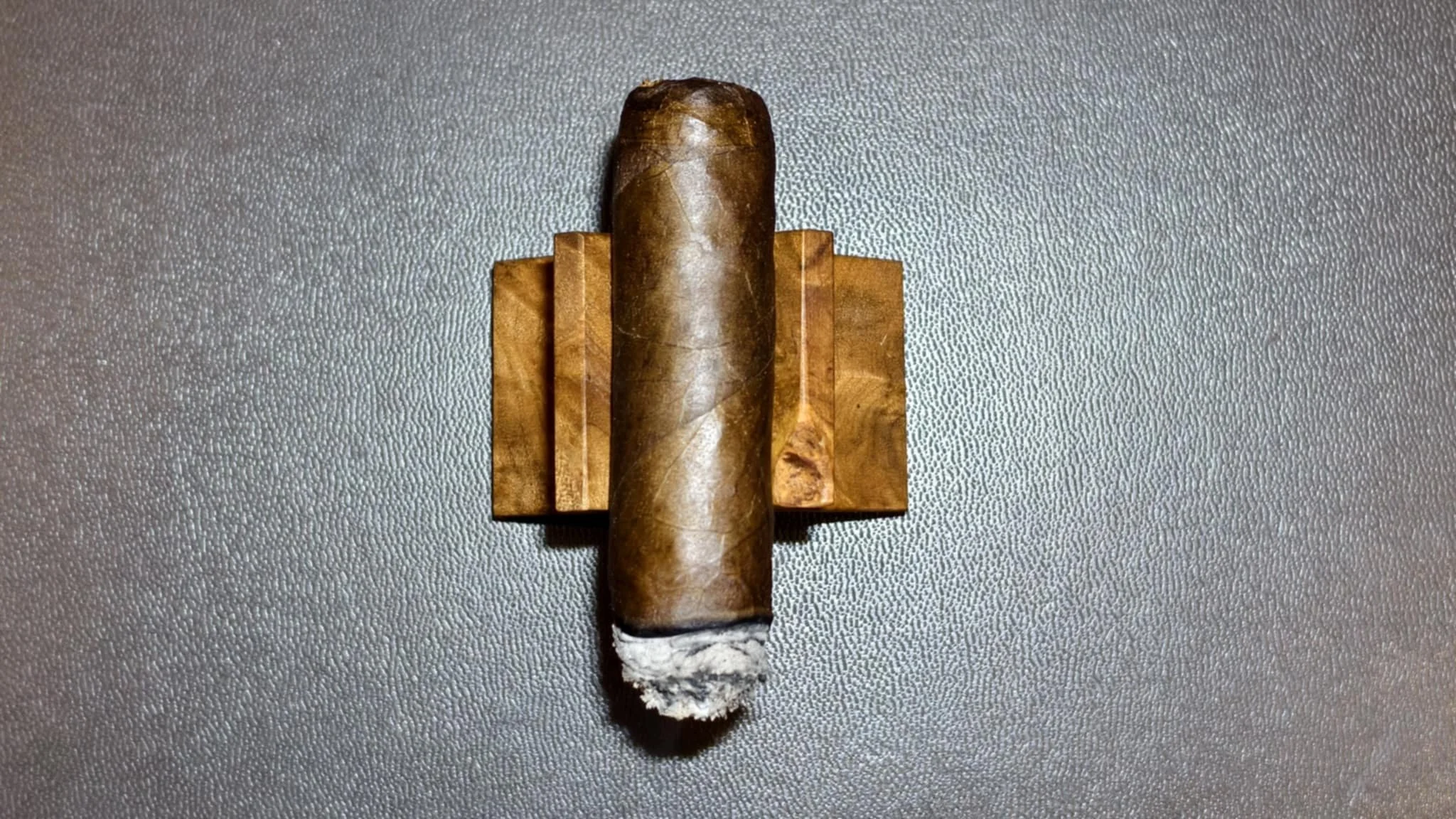
Every cigar has a moment where it quietly stops being forgiving. Nothing dramatic announces it. There’s no clear line in the wrapper or sudden flavour explosion. It just happens somewhere past the comfort of the middle, when the cigar begins to compress into itself and the margin for error narrows. This is the turning point, and it’s where many otherwise good cigars lose people.Up until now, the cigar has been generous. It has tolerated small mistakes in pacing, slight unevenness in lighting, even mild over-puffing. The internal structure still had room to buffer heat, to distribute smoke evenly, to let flavours breathe. At the turning point, that buffer shrinks. The cigar becomes more honest. It stops compensating for you. Physically, the reasons are simple. There is less unburned cigar left behind the ember to act as a cooling chamber. The distance between combustion and your mouth shortens. Oils and resins that were slowly migrating forward now have less space to disperse. The smoke becomes denser, warmer, and more concentrated by default. Nothing “went wrong.” The conditions changed. This is why the same puffing rhythm that felt perfect ten minutes ago can suddenly feel aggressive. The cigar didn’t become harsh on its own. The environment inside it shifted, and the smoker didn’t shift with it. Heat is the central character in this act. Not flavour, not strength, not nicotine—heat. Heat determines which compounds dominate the smoke, how fast sugars caramelise, how readily bitterness shows up, and how much tar and oil coat the palate. When heat stays controlled, the turning point can be one of the most expressive moments in a cigar. When heat runs away, everything collapses into sharpness and ash. What’s interesting is how often people misread this moment. They think the cigar “turned bad” or “fell apart.” In reality, the cigar is asking for a different kind of attention. The tempo needs to slow, sometimes dramatically. Smaller draws. Longer pauses. Less talking, less movement, less distraction. This is where smoking becomes deliberate rather than casual.
One of the hardest habits to break is consistency of rhythm. Many smokers lock into a pace early and never change it, even though the cigar is literally changing shape in their hands. Early on, that rhythm works. Later, it becomes destructive. The turning point rewards adaptability. It punishes autopilot.This is also the stage where people start chasing flavour by drawing harder, which is exactly the opposite of what the cigar needs. Harder draws increase airflow, raise combustion temperature, and push harsher compounds forward. The result is more smoke but less clarity. Flavours compress instead of expanding. What could have been dark sweetness becomes acrid bitterness. What could have been espresso turns into burnt toast. The smarter move is counterintuitive: slow down and accept less smoke per minute. When you give the cigar time, the smoke cools slightly, the ember stabilises, and the flavour profile often regains depth. This is why experienced smokers are comfortable setting a cigar down for a minute or two without anxiety. A cigar doesn’t need constant attention. It needs appropriate attention. The turning point is also where purging starts to make sense—but only when used carefully. Purging is not a fix for bad smoking habits. It’s a maintenance move. By gently blowing smoke back through the cigar, you clear some of the stale combustion gases and condensed tar that build up when the cigar has been running hot or uneven. Done occasionally, it can reset the smoke and restore clarity. Done constantly, it becomes a crutch that masks deeper issues. Another subtle change at this stage is draw resistance. As the cigar burns, ash and internal collapse can slightly alter airflow. A cigar that felt perfect earlier may begin to feel tighter or, occasionally, looser. Both affect heat. A tighter draw encourages harder puffing. A looser draw encourages faster puffing. Either way, the solution is awareness, not force. Environmental factors become louder at the turning point too. Wind, even gentle wind, can spike combustion temperature dramatically. Cold air can stiffen smoke and dull sweetness. Sweet or sugary drinks can amplify bitterness by contrast. Strong alcohol can numb the palate, making the cigar seem harsher than it is. This is why a cigar that feels balanced indoors can fall apart outside, or why a late-stage cigar can feel rough after a dessert even if it was fine before. Flavour development during the turning point tends to go one of two ways. In a well-managed smoke, flavours deepen and become more integrated. Early sweetness turns darker, more molasses-like. Wood becomes aged rather than fresh. Spice sharpens but doesn’t stab. The cigar feels heavier but not chaotic. This is often where people say a cigar becomes “serious.” In a poorly managed smoke, flavours don’t deepen—they narrow. Everything tastes like heat, ash, and bitterness. The individual notes vanish. The cigar feels aggressive rather than intense. And once that collapse happens, it’s hard to reverse completely.
This is why the turning point is less about technique and more about discipline. Not discipline as in rules, but discipline as in restraint. Knowing when to pause. Knowing when not to chase. Knowing that the cigar doesn’t owe you constant stimulation. It owes you coherence. There’s also a psychological element here that doesn’t get talked about much. By this point, people are invested. They’ve smoked half the cigar. They want it to finish well. That desire can push them into forcing the experience instead of letting it unfold. Ironically, that’s when things go wrong. The best way through the turning point is acceptance: acceptance that the cigar is changing, acceptance that your role must change with it. This stage separates smokers who react from smokers who listen. Reacting means fixing symptoms—touching up constantly, purging repeatedly, puffing harder to “get flavour back.” Listening means adjusting behaviour—slowing down, letting the cigar rest, allowing silence between puffs. When handled well, the turning point becomes a bridge rather than a cliff. It carries the cigar into its final act with dignity and depth. When mishandled, it’s where the experience fractures and never quite recovers. In many ways, this is the most revealing part of the smoke—not because it shows the cigar’s flaws, but because it shows the smoker’s habits. The cigar at this stage is honest. It reflects back exactly how it’s being treated. And that’s why I think of it as the turning point. Not just for the cigar, but for the person smoking it.