Humidor Wars: 62% vs 65% vs 69% – What Smokers Really Prefer
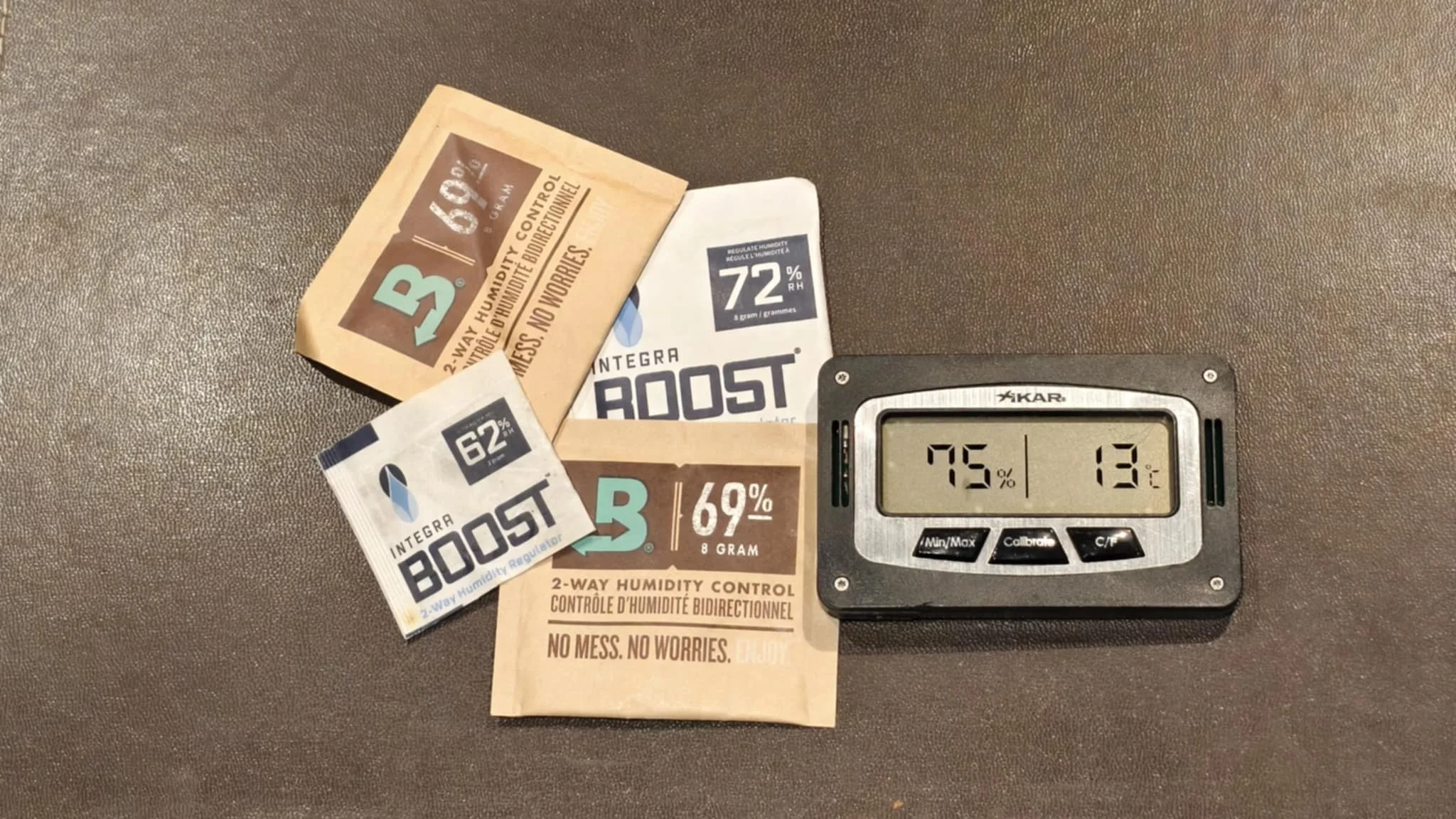
There’s a reason humidity arguments never die. You can change cigars, brands, countries, ring gauges, even your own palate over time… but the moment someone says “I keep mine at 62%,” half the room nods like it’s the secret handshake and the other half looks at them like they’re storing cigars in a bread bin. In 2026, the old “70/70” idea still floats around as a kind of inherited wisdom, but if you spend any time listening to real smokers—especially the ones who actually smoke through boxes rather than just collecting them—you’ll notice a quieter trend: a lot of people have drifted down into the low-to-mid 60s because they’re tired of tight draws, spongy cigars, and constant burn corrections.
The funny part is that all three camps—62%, 65%, and 69%—are “right” depending on what you smoke, how you smoke, where you live, and what you care about most. Some people want perfect draw and razor burns. Others want maximum suppleness, sweetness, and a softer mouthfeel. Some people are storing short-term rotation cigars; others are building a ten-year cellar. The mistake is thinking there’s one magic number that works for every cigar and every climate, forever.
I’ve come to see it less as a single target and more like a tuning range. Cigars aren’t static objects. They’re bundles of leaf that absorb and release moisture, and small humidity changes can shift how the cigar behaves in your hand and in the flame. The “wars” happen because smokers are often arguing from different starting points without realising it: different climates, different humidors, different wrappers, different smoking cadence, different expectations. The number on the hygrometer becomes a flag for a whole set of experiences.
So instead of declaring a winner, I prefer to break it down the way smokers actually talk about it when they’re being honest: “What does 62% give you, what does 65% give you, what does 69% give you, and what are you willing to trade to get it?”
The Three Camps and Why They Swear They’re Right
The 62% camp is usually made up of people who’ve been burned—sometimes literally—by “too wet.” They’re the ones who got tired of cigars feeling spongy, drawing like a blocked straw, burning unevenly, going out mid-conversation, and needing more touch-ups than a tattoo. When they dropped their storage down to around 62–63%, their world suddenly got easier. Draw opened up. Burn improved. Plugged cigars became less frequent. And the biggest emotional benefit: they stopped feeling like they were fighting their own humidor.
There’s logic behind that. At higher RH, cigars physically swell. The filler takes on moisture and expands, which can tighten airflow. That’s why “over-humidified” and “tight draw” show up together in so many smoker conversations and storage guides. On top of that, wetter cigars need more energy to combust. That can lead to tunnelling, uneven burns, and relights, especially if the cigar is densely packed to begin with. It’s not that 69% automatically ruins cigars; it’s that 69% can expose weaknesses in construction and can make your own smoking technique matter more.
The 62% crowd also tends to overlap with smokers who prefer a crisper burn and a cleaner finish. Lower humidity often produces a slightly firmer draw and a more eager combustion, which makes the cigar feel more “awake.” For a lot of people, especially those who smoke more than they collect, this is the sweet spot where cigars behave like cigars instead of damp sponges.
But here’s the part the 62% camp doesn’t always love to admit: sometimes you pay for that convenience with texture. Lower RH can make certain cigars feel sharper, thinner, or less “round” in the mouth. Some smokers describe it as losing a bit of sweetness or richness, especially with blends that are already delicate. You’ll hear people say the draw improves but something in the flavour softens or dries out. That trade-off is real for some palates, and it’s why the 62% approach feels like a revelation to one smoker and a deal-breaker to another.
Then there’s the 65% camp, which is basically the diplomacy faction. They’ve tried both extremes and landed in the middle because it gives them consistency without drying the cigar into a different personality. Around 65% tends to keep cigars supple enough to feel luxurious while still firm enough to burn well and draw comfortably, especially if your temperature is stable and you’re not storing in a swampy climate. You’ll see a lot of people settling there after experimenting, because it’s the easiest “set it and forget it” number that avoids the worst problems on both sides.
If you’re the type who smokes a mix of styles—some lighter cigars, some darker, some oily wrappers, some drier Cubans, some heavier New World—65% often behaves like a reliable baseline. It doesn’t make every cigar perfect, but it rarely makes them un-smokable either. And if you live somewhere that runs warm, dropping from the high 60s to 65 can also feel like a safety move against mould risk while still keeping cigars comfortable.
The 69% camp is the traditionalists and the “feel” people. They’re chasing suppleness, richer mouthfeel, and what they consider the ideal texture for flavour expression. A slightly higher RH can make cigars feel more elastic, reduce wrapper cracking risk, and sometimes makes the smoke feel softer on the palate. This is especially appealing if you smoke slowly, in a controlled environment, and you like cigars to feel plush rather than crisp.
It’s also common for smokers to end up in the 69% zone because their setup naturally stabilises there. Depending on humidor type, seal quality, ambient humidity, and how your hygrometers read, the pack you use doesn’t always equal the number you see. Some people run 69% packs and still measure mid-60s in their humidor, which is why you’ll hear debates where everyone thinks they’re arguing about the same number when they’re actually living in different realities.
The weakness of the 69% approach is the same reason the 62% camp exists: higher humidity can magnify draw and burn issues, particularly with tightly bunched cigars, oily wrappers, or cigars that are already a little “heavy” with moisture from the factory. If your cigars arrive wet and you throw them straight into a high-60s environment, you’re basically inviting them to stay wet. That’s why you see so many smokers talk about dry-boxing or resting fresh arrivals at lower RH first, then moving them to a long-term setting later.
So the camps aren’t really fighting about numbers. They’re fighting about what annoys them most. The 62% camp is allergic to burn problems. The 69% camp is allergic to dryness and lost texture. The 65% camp wants peace and repeatability.
My Practical Take: How I’d Test It and What I Think
If you want to turn this debate into something useful for your own humidor rather than just another argument, you need two things: consistency and a fair test. The moment you do that, the “wars” become much calmer because you stop talking in theory and start talking in results.
The simplest way to test your own preference is to take the same cigar—same box if possible—and run it through three conditions over time. Not forever, not for years, just enough that the cigar actually equalises. People who do this seriously often compare a lower-RH “dry box” with a more standard storage RH and a higher RH condition, then smoke side by side to see what changed. What you’re looking for is not just “which tastes better,” but what changes reliably: draw resistance, burn straightness, ash structure, smoke temperature, and whether the cigar wants to go out or race ahead.
In my own testing mindset, I’d pay attention to three dimensions that matter more than most people admit. The first is draw behaviour across the whole cigar, not just at the start. Some cigars draw fine for the first third and then tighten as moisture and oils migrate. Some start tight and then open up as they warm. That difference will show up more clearly when you compare RH conditions.
The second is burn line behaviour, because it’s the easiest thing to document. You can literally take the same photo angle at the same point in the smoke—say, ten minutes in and thirty minutes in—and compare. At higher RH, you’ll often see more reluctance in the ember and more need for touch-ups if your smoking pace is gentle. At lower RH, you’ll often see a more eager burn and less need to correct, but potentially a hotter character if you don’t slow down. That’s not “better or worse,” that’s a behavioural shift that you can learn to manage.
The third is mouthfeel and finish, which is where the debate becomes personal. Some smokers find lower RH gives them a cleaner, sharper finish with less muddiness. Others find higher RH preserves a softer, rounder texture that they associate with luxury. Both can be true. This is exactly why you see people reporting “62 fixed my plugged cigars” and other people replying “65 felt better for flavour” and nobody is lying.
If I were building this as a real “humidor wars” piece for readers, I’d make the honest point that the number itself isn’t the only variable. Temperature changes everything. Warmer air holds more moisture, and the same RH can feel different depending on where you live and how stable your storage is. People in humid climates often fight to keep RH down because ambient conditions push their humidor upward no matter what they do. That’s why “my 65% packs don’t go below 69%” is such a common complaint in certain regions. It’s not user error; it’s the environment winning.
I’d also be clear about cigar style. Some cigars are naturally “wet” smokers or packed tight. Some wrappers are oily and behave differently. Some cigars—especially those people tend to smoke younger—arrive with more moisture and need rest. In those cases, a lower RH resting period can be the difference between a plugged disappointment and a clean smoke. That’s why the low-60s crowd is so loud: they’ve solved a practical problem in their rotation.
My personal conclusion in 2026 is that the war is mostly a misunderstanding. The real preference isn’t “62 versus 69.” The real preference is “do you prioritise performance or plushness?” And the answer can change depending on what you’re smoking that month.
If you smoke a lot and you value easy draws, straight burns, and fewer relights, living in the 62–65 zone makes sense. If you smoke slowly, prefer a softer feel, and your cigars behave well at higher RH, 69 can make sense, especially for certain blends or long resting. And if you want one number that rarely causes drama across a mixed collection, 65 is hard to argue against as a baseline.
The smartest move isn’t picking a side. The smartest move is treating humidity like seasoning. You don’t cook every dish with the same salt level. You adjust. You learn what your palate likes, and what your cigars need to behave.
And once you do that, the humidor stops being a battleground and starts being what it should be: a quiet place where good cigars stay ready for you, not the other way around.