Are Cuban Cigars Becoming Luxury Items Only?
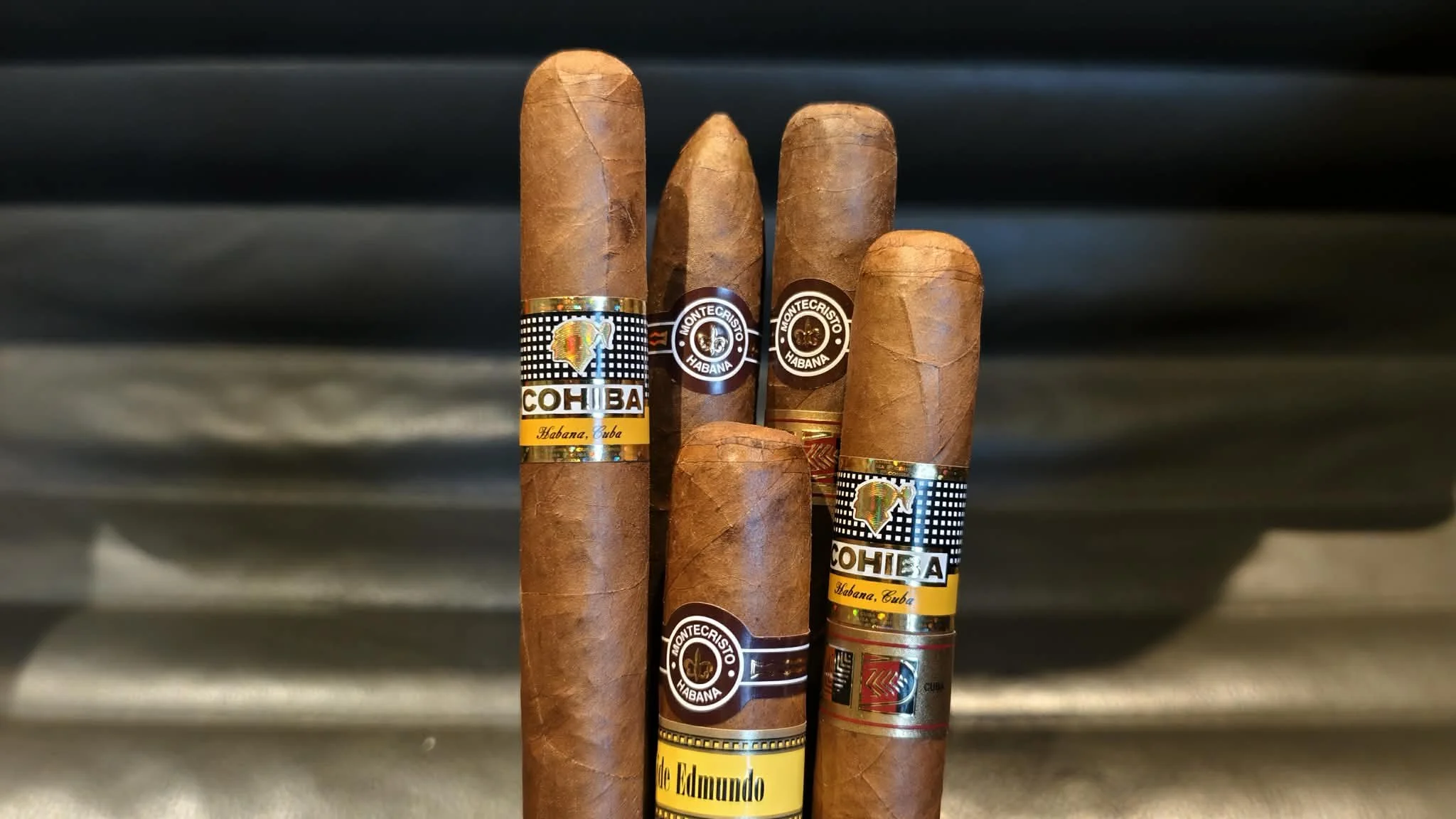
There was a time when Cuban cigars had two lives at once. One life was the myth—the romance, the history, the idea that you’re smoking something tied to place and tradition. The other life was simpler: you could still walk into a decent shop, buy a few trusted staples, and actually smoke them like cigars, not like museum pieces.
In 2025, that second life feels like it’s shrinking.
I’m not saying Cuban cigars are “finished” or that they’ve stopped being brilliant when they’re on form. I’m saying the experience around them is changing, and it’s changing in a way that pushes everyday smokers toward the edges. Prices continue to rise across most of the portfolio, even if some of the latest increases are smaller than the wild jumps many people remember. A published Spain price list for 2026 showed increases across nearly the entire range, averaging around 5%. That’s not an apocalypse by itself, but it sits on top of years of upward movement and an obvious shift toward positioning certain lines as outright luxury objects.
At the same time, the company behind Cuban cigar exports keeps reporting record revenue. Habanos reported $827 million in revenue for 2024, with double-digit growth over 2023, and China remains the top market by value, representing a large share of revenues in reporting around 27%. That matters because it tells you the demand is not fading. If anything, the market is telling Habanos, loudly, that it can keep pushing prices.
So the real question isn’t “are Cubans luxury?” They’ve always carried prestige. The real question is whether they’re drifting into a world where the everyday smoker is no longer the core audience—where the cigar is designed, priced, and distributed primarily for collectors, high-end gifting, and status consumption rather than for the guy who just wants to smoke a great cigar after dinner.
Scarcity plus global demand: the fuel that turns tobacco into “luxury”
Luxury isn’t only about price. Luxury is about friction. It’s about effort and scarcity and uncertainty becoming part of the story.
Cuban cigars in 2026 have friction built in from every angle. Availability is inconsistent, even for classic lines. You’ll find plenty of people saying supply looks decent for a short window, then dries up, then returns unpredictably. You see that uncertainty reflected in ongoing community discussions where smokers try to forecast availability quarter-by-quarter like it’s a commodity market. That alone creates “luxury behaviour,” because scarcity changes how people buy. When you don’t know if you’ll see the cigar again, you stop buying singles for tonight and start buying for fear.
Then the global demand piece kicks in. When a producer reports record revenues, names China as the #1 market by value, and highlights a short list of top revenue markets including Spain, Switzerland, the UK and Germany, it’s basically telling you where the gravity is. And gravity matters. When demand is strong in markets willing to pay a premium, supply tends to flow toward those buyers. That doesn’t require a conspiracy; it’s just business.
The luxury shift also shows up in how the brand story is being expressed. The ultra-premium end isn’t subtle anymore. A humidor of 400 Cohiba Behikes selling at auction for €4.6 million, with the math coming out to roughly €11,500 per cigar, is not a normal “enthusiast” market. That’s luxury theatre. Those events pull headlines, which feeds the collector mindset, which makes the ordinary box of cigars feel like it should be treated as an asset rather than as something you actually burn.
And once that mindset spreads, everything gets dragged upward. A standard cigar becomes “investment-adjacent.” People talk about buying, holding, reselling. Not everyone does it, but the tone changes. That’s how luxury happens: the object becomes a symbol and a store of value, not only a consumable.
Even the reality of Cuba itself leaks into the cigar story now. When major events tied to the Cuban cigar world get postponed due to national disruptions like fuel shortages and blackouts, it underlines a basic truth: supply chains and production conditions aren’t happening in a perfectly stable environment. Uncertainty feeds scarcity. Scarcity feeds price. Price feeds luxury positioning.
So yes, the demand is real. The prestige is real. The instability is real. And together they create a perfect environment for Cuban cigars to be treated like luxury goods even when the cigar in your hand is just a cigar you want to smoke.
Pricing trends and the uncomfortable question: who gets priced out?
Here’s the part where people get defensive, because it touches wallets and identity at the same time.
Cuban cigars have always been more expensive than many New World options, but the gap in recent years has made it feel like two different universes. What used to be an “occasional treat” purchase is, for many smokers, now a “think twice” purchase. You can see it even in how pricing gets discussed: not as a casual detail, but as a central topic.
Some of this is broad portfolio movement. That 2026 price list in Spain showing around a 5% average increase is a good example of steady upward pressure across the board. And it’s sitting on top of earlier waves where increases on standard lines were discussed as much higher in certain years and markets. Even if the most recent rise is “modest,” it’s still a rise, and it’s still compounding.
Then there’s the deliberate luxury tiering. Certain lines have been pushed aggressively into premium pricing. Cohiba Behike is the clearest example. In 2023, published coverage described major price hikes that put individual Behikes around the $300 range in some contexts. Whether you personally pay that or not, the signal is obvious: some Cuban cigars are being positioned not as “smokes,” but as luxury statements.
And this luxury tiering isn’t only about the top of the pyramid. When you’re in Havana and you see premium lines priced like luxury goods while staples are harder to find, you start to feel the market’s priorities. A 2025 shopping update out of Havana described how certain premium lines were easier to find than classic staples, while giving specific per-cigar price examples and year-over-year increases. That detail matters because it shows something subtle: scarcity isn’t always evenly distributed. The market often makes room for what earns more, faster.
Now layer in the fake problem, because fakes are the dark mirror of luxury. When an item becomes expensive and scarce, the counterfeit market grows. Cuban cigars have been dealing with counterfeits for years, but the intensity of discussion around authenticity and the push toward verification measures tells you how serious it is. For the everyday smoker, this adds another cost that isn’t on the price tag: the stress tax. You either buy from very trusted channels, or you accept risk. That stress pushes some people out of the Cuban market entirely, not because they hate the cigars, but because they’re tired of feeling like they need to be detectives.
So are everyday smokers being priced out? For some, yes—especially if “everyday smoker” means someone who used to have a casual rotation of Cubans rather than one special box a year. Price increases, uneven availability, and authenticity anxiety create a situation where Cuban cigars become something you plan for, not something you casually enjoy.
But here’s the more interesting twist: not everyone is being priced out at the same rate, because the Cuban market is no longer one market. It’s a layered luxury ecosystem. At the top, you’ve got collectors and high-end buyers who treat cigars like status goods. In the middle, you’ve got enthusiasts who still buy Cubans but more selectively, often focusing on fewer brands or buying less often. At the bottom, you’ve got smokers who simply step away and replace Cuban experiences with New World cigars that deliver consistency without the drama.
And that’s where the “luxury only” question becomes real. Not because Cubans can’t be smoked, but because the system increasingly rewards the people who buy them as luxury objects, while making it harder for the casual smoker to participate without feeling either financially punished or constantly frustrated.
My own take is that Cuban cigars aren’t becoming luxury items only in the absolute sense—there will always be everyday Cuban smokers, and there will always be people who find their way into the market. But the centre of gravity has shifted. When a company posts record revenues, highlights high-paying markets, and operates in a scarcity environment while showcasing multi-million-euro auctions, it’s hard to pretend the strategy is aimed at the everyday guy first.
What I think we’re watching in 2026 is Cuban cigars becoming luxury-coded by default. Even when you buy a normal box, the ecosystem around it pushes you to treat it like a luxury object: stash it, protect it, verify it, worry about replacing it, talk about it like an asset.
And maybe that’s the real loss for the everyday smoker. Not just the price, but the freedom. The old joy of grabbing a great Cuban without feeling like you’re making a financial decision or managing a collectible. If Cuba wants to stay the spiritual centre of cigar culture while leaning into luxury economics, it can—but it’s going to keep creating a bigger gap between the myth and the daily smoke.