The Return of the Thin Cigar: Why Smokers Are Falling Back in Love With Coronas and Lanceros
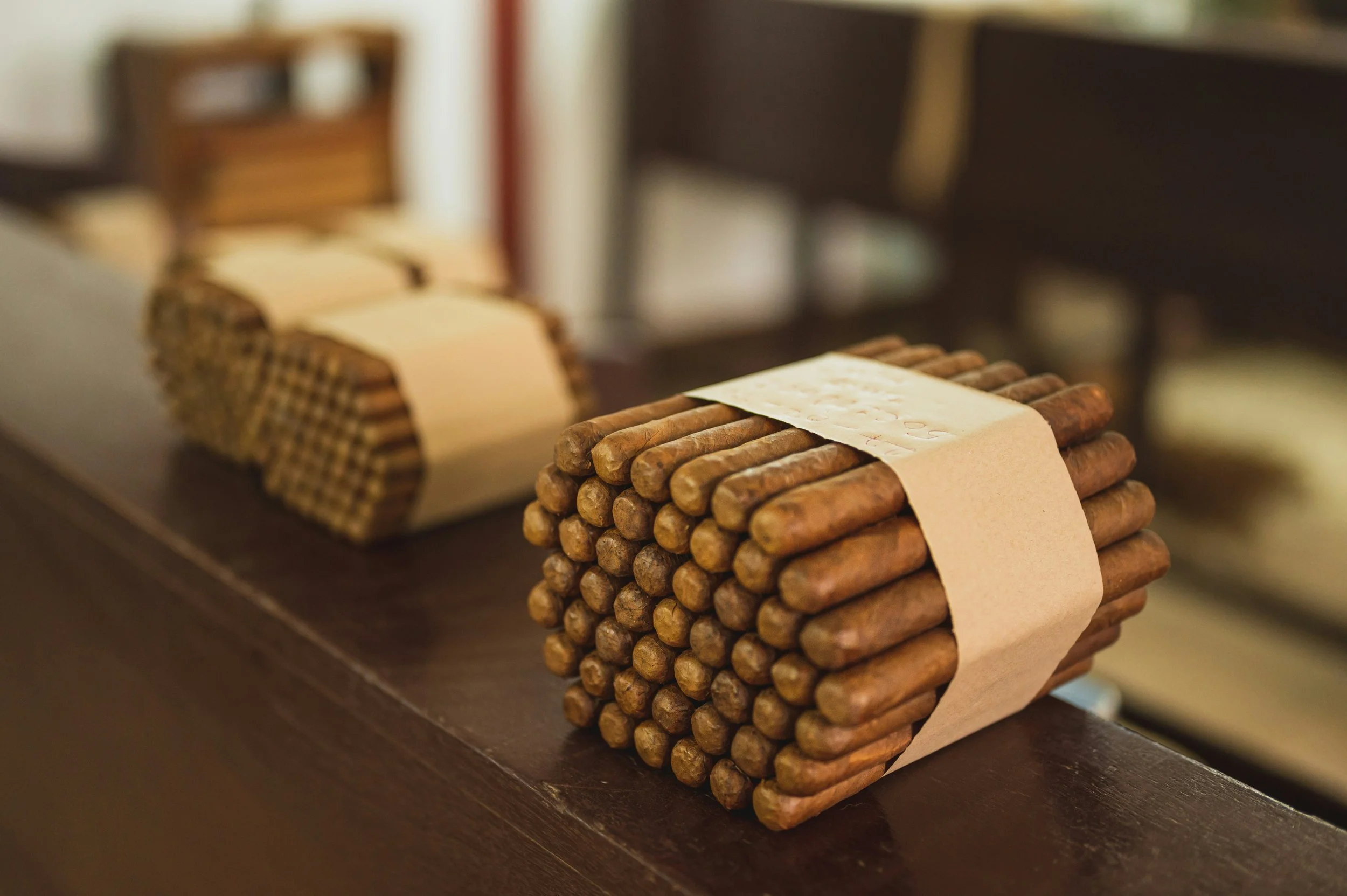
For almost twenty years, the cigar world seemed obsessed with getting bigger.
Every year the ring gauges grew. Robustos became gordos, gordos became giant 60-rings, and before long every new release seemed to come in something thick enough to look like a small tree branch. The industry loved it because larger cigars looked modern, smoked cooler, and gave people the feeling they were getting more for their money.
But quietly, over the last couple of years, something has started to change.
More and more experienced smokers are reaching back into the humidor for coronas, lanceros, lonsdales and petite coronas. The sort of cigars that once felt old-fashioned are suddenly becoming interesting again. You see it constantly in forum discussions now. Smokers who spent years buying large ring gauges are talking about how much more flavour they find in a 42 or 38 ring cigar. Others are rediscovering classic thin vitolas and wondering why they ever left them behind. On the Cuban side especially, there has been a clear revival of interest in small ring gauge cigars, with smokers chasing petite coronas, lanceros and long, slim formats that had almost disappeared from the conversation.
I do not think this is nostalgia. I think smokers are slowly remembering something the old Cuban factories understood very well: thinner cigars often tell the truth more clearly.
Why Slim Cigars Usually Taste Better
The reason thinner cigars have such loyal followers comes down to proportion.
In a large ring gauge cigar, there is more filler compared to wrapper. In a slim cigar, the wrapper plays a much bigger role. Since the wrapper often contributes a huge amount of the flavour—sweetness, spice, earth, cocoa, floral notes, all depending on the leaf—that means thinner cigars often taste sharper, brighter and more focused.
A lancero is probably the clearest example. Because it is long and slim, there is relatively little filler and a large amount of wrapper influence. That is why lanceros often feel more intense and more precise than the same blend in a robusto or toro. Smokers regularly describe lanceros as delivering “concentrated flavours” and requiring a slower, more attentive style of smoking. One recent discussion about lanceros was full of smokers saying they reserve them for long, quiet afternoons because the flavours are so intricate and rewarding when smoked properly.
The same thing happens with coronas and petite coronas. They often seem more balanced than their thicker equivalents because the cigar burns hotter and more directly. That sounds like a bad thing, but when the blend is right it actually allows flavours to appear more clearly. Earth tastes more defined. Pepper becomes cleaner. Sweetness is easier to find. You are not digging through a wall of smoke trying to find the blend underneath.
Many experienced smokers now openly say they prefer cigars under 46 ring gauge because they find them more flavourful and more consistent than the larger formats that became fashionable in the 2000s and 2010s. One long-running discussion among serious Cuban smokers went even further, with several smokers arguing that cigars around 38–42 ring gauge regularly outperform thicker vitolas both in flavour and in construction.
I think there is a lot of truth in that.
Large cigars can sometimes hide flaws. If the draw is slightly off or the blend is slightly uneven, there is so much tobacco that the cigar can still feel rich and satisfying. Thin cigars are less forgiving. Every mistake is obvious. If the blend is wrong, you notice immediately. If the construction is poor, the cigar punishes you. But when a thin cigar is made properly, the result can be extraordinary because there is nowhere for anything to hide.
That is why some of the most legendary cigars ever made are slim. The Cohiba Lancero. The Montecristo Especial. The Trinidad Fundadores. The old-school H. Upmann Corona Major. Even outside Cuba, many of the most admired cigars in recent years have been lanceros, lonsdales and coronas rather than giant 60-rings.
There is another reason too: time.
A lot of people assume thinner cigars are quicker, but that is not always true. A proper lancero can still take two hours if smoked slowly. What changes is the pace of the experience. Slim cigars reward patience. They make you slow down, take smaller puffs, and pay more attention. In a strange way, they feel less casual and more serious.
Perhaps that is exactly why smokers are coming back to them.
Why Slim Cigars Are Making a Comeback in 2026
Part of the shift is simple fatigue.
After years of giant ring gauges, I think many smokers have realised that bigger is not always better. Larger cigars can be impressive, but they can also become repetitive. Too much smoke, too much filler, too much of the same flavour for too long. A thick cigar often starts strong and then spends the next hour repeating itself.
Thinner cigars rarely do that. They tend to feel more dynamic. Because they burn differently, because the wrapper matters more, because the smoke is more concentrated, the cigar often evolves in a more interesting way.
There is also a practical side. Modern life has changed the way people smoke. Fewer people have three uninterrupted hours for a giant cigar. A corona or petite corona gives you more flavour in less time. Even many smokers with large humidors are now talking about how much more they enjoy petite coronas and small ring gauges because they fit real life better without feeling like a compromise. One recent discussion among Cuban smokers described petite coronas as “little flavour bombs” and argued that they now offer some of the best smoking value available.
That change is starting to show up in the market too. Several manufacturers have quietly brought back older, slimmer vitolas or started giving more attention to lanceros again. The fact that a petite lancero became one of the most talked-about and highest-rated cigars of 2025 says a lot about where the mood is heading.
Forum conversations also show that smokers are no longer treating thin cigars as a strange niche for collectors. They are actively buying them again. People are hunting for old lonsdales, chasing lanceros, discussing petite coronas and rediscovering the cigars they ignored when thick ring gauges dominated the shelves. Even brands that built their reputation on larger cigars are now seeing renewed interest in their slimmer formats.
I do not think the big ring gauge cigar is disappearing. There will always be smokers who enjoy a large, cool-burning toro or gordo. And sometimes that is exactly the right cigar for the moment.
But I do think the pendulum is swinging back.
Because after years of chasing size, many smokers are starting to chase flavour again. And when flavour becomes the priority, the slim cigar suddenly makes perfect sense.
The irony is that none of this is really new. The old cigar world always knew it. The classic vitolas that built the reputation of Cuba and later the New World were not giant cigars. They were coronas, lanceros, lonsdales, panetelas. Long, elegant, relatively thin cigars designed to show the blend rather than bury it.
For a while, the industry forgot that.
Now, slowly, smokers are remembering.