Brown Leaves to Cigars: How Dead Leaf Becomes a Living Smoke
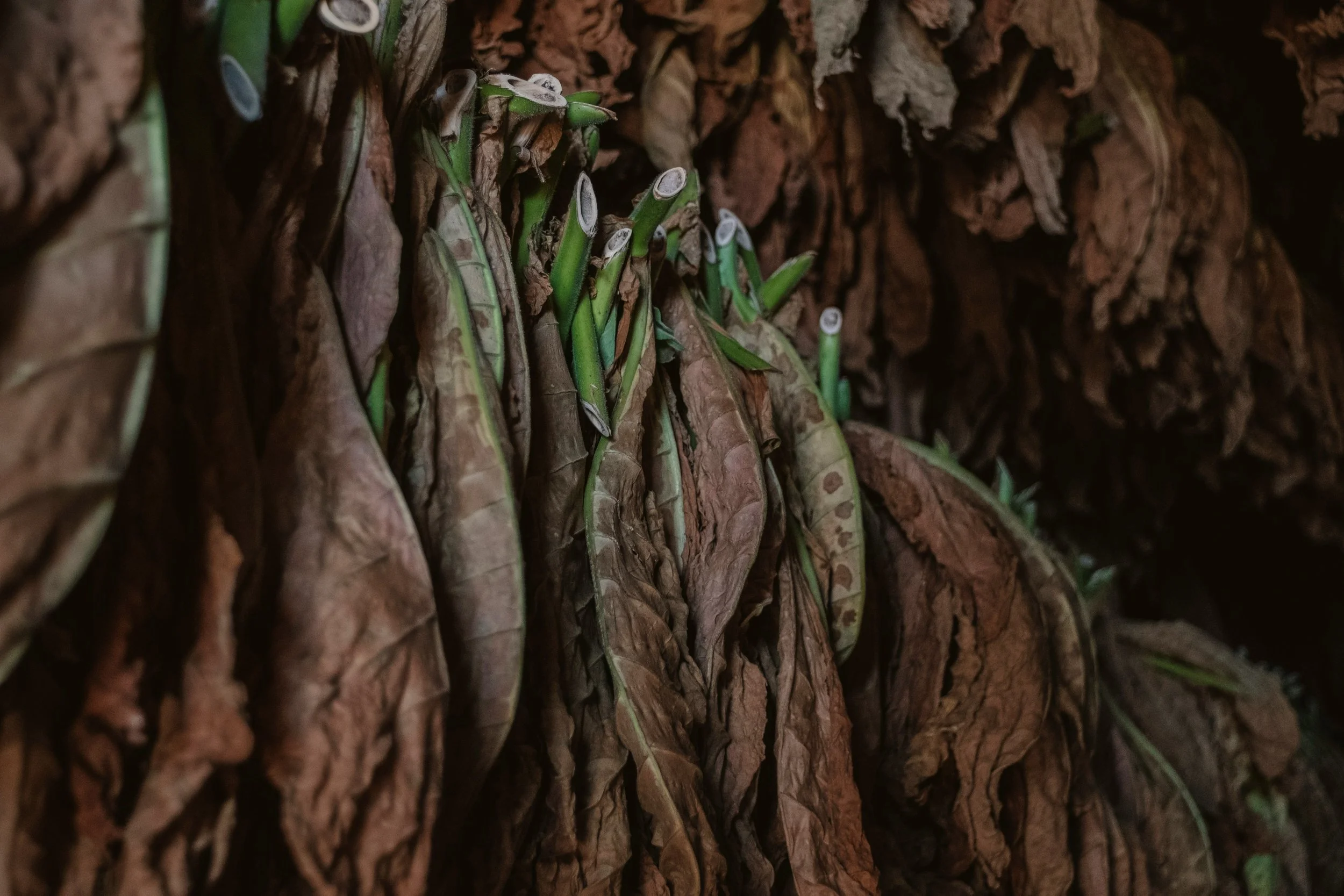
A cigar only really starts once the leaf stops being green.
That sounds simple, but it is the whole turning point. Green tobacco is still plant life—wet, raw, full of chlorophyll, starches, and all the things that make a plant grow but not necessarily burn well or taste good. Brown tobacco is something else entirely. It has already gone through the first great transformation. Moisture has dropped, chlorophyll has broken down, the leaf has softened, the colour has shifted, and the smell starts moving away from “field” and toward something more recognisably cigar-like. Air curing in barns is what gets the leaf there, and it is why tobacco goes from green to yellow to brown over a period that often runs several weeks rather than a couple of hurried days.
That brown leaf, though, is still not a cigar. It is only a possibility.
This is the stage a lot of casual smokers underestimate. They see the finished cigar, the wrapper, the band, the box, and forget how much has to happen between a brown leaf hanging in a barn and a proper smoke that burns evenly and tastes clean. Because once the leaf is brown, the work becomes less visible and far more decisive. The leaf has to be sorted, fermented, rested, stripped, blended, rolled, and then often rested again. In other words, the leaf has to be turned from agricultural material into a controlled experience. That transformation is what separates “tobacco” from “cigar.”
And the reason it matters is simple: if that chain is rushed or uneven, the cigar might still look beautiful, but it will never quite behave the way it should.
Once the Leaf Turns Brown, the Real Refining Begins
Curing gets the leaf to brown, but fermentation is what starts making it civilized.
After curing, the leaf still carries roughness, extra moisture in the wrong places, and a chemistry that is not ready for smoking. Premium cigar makers stack tobacco in piles or bulks so that heat and moisture build naturally inside the leaf mass. This controlled fermentation reduces harshness, changes aroma, darkens and softens the leaf further, and prepares the tobacco for the long period of classification and resting that follows. It is one of the reasons serious cigar tobacco is so time-consuming compared with ordinary smoking tobacco. The leaf is not simply dried; it is reworked by heat, pressure, and time.
What makes this stage fascinating is that not every leaf is treated the same. Wrapper, binder, and filler do not just have different jobs in the finished cigar; they are handled differently before they ever reach the rolling room. The best wrappers need beauty, elasticity, and a cleaner visual texture, while fillers and binders are judged more for burn, aroma, structure, and position on the plant. That is why the brown leaf does not move through the system as one giant anonymous crop. It gets separated, graded, and steered toward its future role.
This sorting phase is far more important than people think. When factories classify brown leaf, they are not simply organising inventory. They are deciding how the cigar will breathe, how it will burn, and how its flavour will stack. Wrapper leaves head toward one destiny, stronger and more aromatic fillers toward another. The people stripping and sorting tobacco are doing some of the most important quality work in the whole process, because once the wrong leaves are matched badly, no amount of romance later will fix it. Habanos’ own glossary makes that division very clear, even down to the specific workers whose job is stripping wrappers separately from binders and fillers.
And then there is aging.
This is the part many smokers love talking about once the cigar is boxed, but the tobacco itself ages long before that. After curing and fermentation, leaf is often rested in bales or in carefully managed storage so that its chemistry steadies and the roughest edges continue to soften. Some premium processes even describe further fermentation or long settling periods before the tobacco is finally ready to be blended and rolled. That is why good cigar leaf has a kind of calm to it. It has already spent a long time becoming less green, less raw, less reactive.
This is also where the idea of “brown leaves” gets interesting from a smoker’s point of view. Brown does not mean finished. Two brown leaves can look similarly mature and still be miles apart in usefulness. One may be supple, aromatic, and ready for wrapper. Another may be more suited to the bunch because it has the right body or burn. Brown is the gateway colour, not the final answer.
So when people romanticise tobacco barns—and fair enough, they should—they are often admiring the beginning of maturity, not the end of it.
Turning Brown Leaf Into a Cigar Is Really About Control
Once the leaf has cured, fermented, sorted, and rested enough, it finally moves toward becoming a cigar. This is the stage where all the invisible decisions become physical.
The filler is arranged into a bunch. The binder holds that bunch in its working shape. The wrapper finishes the cigar visually and texturally, but also contributes flavour and burn behaviour. Premium cigar rolling is not just wrapping leaves into a cylinder. It is building a structure that can draw properly, hold its shape under heat, and deliver smoke in a consistent way. The bunching process alone—whether done more tubular, more accordion-like, or in another traditional method—changes how the cigar breathes and how air moves through it.
That is why the leap from brown leaves to cigars is not merely decorative. It is mechanical as much as it is artisanal. A bad roll can ruin beautiful tobacco. A good roll can let great tobacco show itself. Factories know this, which is why even after rolling, many premium cigars are rested again. They are allowed to settle in controlled conditions so the moisture evens out, the wrapper relaxes into the bunch, and the cigar stops behaving like a fresh construction project and starts behaving like a finished object. Recent process guides still describe that post-roll rest as critical because it blends flavours, softens harshness, and improves the burn.
And this is the part I always come back to: the cigar you finally light is not one transformation. It is several transformations layered together.
The leaf had to lose its greenness first. Then it had to survive the heat and discipline of fermentation. Then it had to be judged, separated, stripped, and matched to the right role. Then it had to be rolled in a way that respects airflow and structure. Then it often had to rest again so the whole thing could become one object instead of three types of leaf sharing the same wrapper.
That is why I never really see a cigar as “rolled tobacco.” It is more accurate to see it as brown leaf that has been taught how to behave.
And the finest cigars always show that teaching. They burn with the calm of something that has been prepared properly. They taste clean because the leaf had enough time to lose its roughness. They hold together because the tobacco was sorted and handled with purpose. They feel alive not because they are fresh, but because they were matured in stages.
So when I think about the journey from brown leaves to cigars, I do not think of it as a factory process. I think of it as a long narrowing of possibility. Every stage removes something that should not remain—too much moisture, too much bitterness, too much disorder—until what is left is a cigar that can finally do the one thing all that work was leading toward: sit quietly in your hand, take flame, and turn years of slow preparation into an hour that feels effortless.