Harvest: The Moment Tobacco Stops Growing and Starts Becoming a Cigar
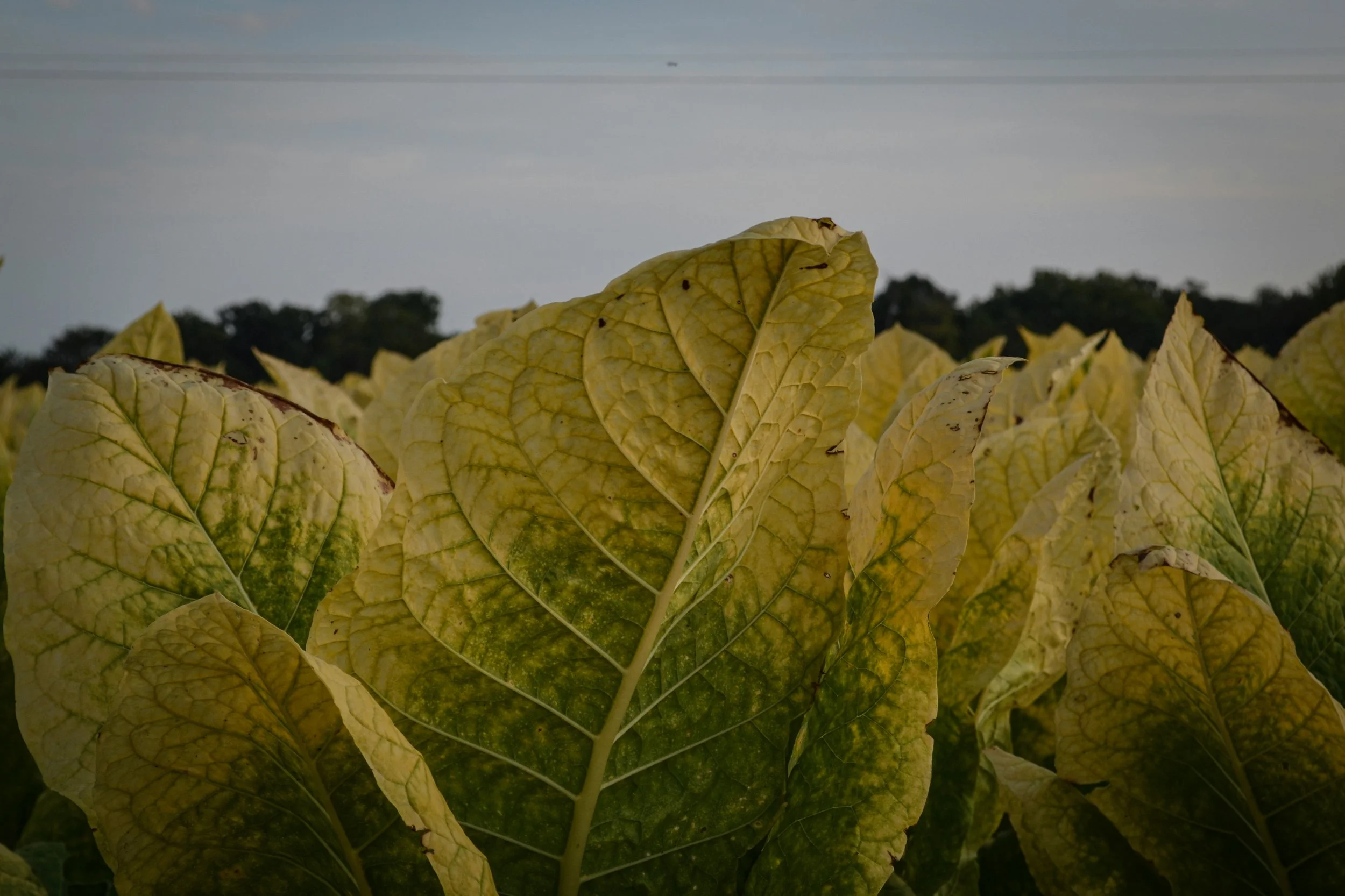
Harvest is one of the most important moments in the whole life of cigar tobacco, but it rarely gets the attention it deserves. People love talking about fermentation, ageing, blending, wrappers, factories, limited editions, all the romantic parts we see closer to the finished cigar. But harvest is where the plant is finally judged. It is the moment the farmer decides that the leaf has taken enough from the soil, the sun, the rain, and the plant itself. Cut too early and the tobacco can stay green, thin, sharp, and underdeveloped. Cut too late and the leaf can become coarse, overripe, damaged, or harder to cure cleanly.
That decision is not just agricultural. It becomes flavour later.
A cigar leaf is not harvested because the calendar says so. It is harvested because it looks, feels, and behaves ready. The farmer is watching colour, texture, angle, thickness, oil, elasticity, and position on the stalk. In broad terms, tobacco is harvested somewhere around 70 to 130 days after transplanting, depending on variety, climate, growing method, and intended use, but serious cigar tobacco is never just “cut at day X.” It is read by people who know the plant.
And this is why harvest is so fascinating. The same plant does not ripen all at once. The lower leaves mature first. The middle leaves follow. The upper leaves take longer because they are exposed to more sun and continue developing strength, oils, thickness, and nicotine. That is why premium cigar tobacco is often harvested in stages from the bottom upward, usually a few leaves at a time, in a process called priming. A plant may be harvested over several passes, sometimes over weeks, because each level needs to reach its own maturity before it is taken.
So harvest is not one action. It is a sequence of decisions.
Reading the Plant: Primings, Timing, and Why Every Leaf Has a Different Job
To understand cigar harvest, you have to understand primings.
The tobacco plant is naturally arranged like a ladder of flavour and strength. The lower leaves, often called volado in Cuban language, are usually lighter, thinner, and especially valued for combustibility. These leaves are not always the flavour stars, but they help a cigar burn. Move up into the middle of the plant and you reach seco and viso territory, where aroma, balance, and body begin to build. Higher still is ligero, the darker, thicker, stronger leaf that receives the most sun and gives a cigar strength, depth, and slower burn. In rare cases, at the very top, you may find medio tiempo, an unusually intense leaf used only occasionally because not every plant produces it.
That structure is why harvest can never be careless. If you take all the leaves at the same time, you treat very different tobacco as if it were one thing. But a good cigar is built precisely because those differences exist. Volado, seco, viso, ligero, and occasionally medio tiempo all have different roles in the blend. The farmer’s job is to separate those roles early, while the leaf is still on the plant.
The lower leaves come first. They have had less sun, less intensity, less time to thicken. They tend to be lighter and easier burning. Once those are removed, the plant continues pushing energy upward into the remaining leaves. This is one of the beautiful parts of priming: by harvesting gradually, the farmer allows the upper leaves to continue developing before they are taken. The plant is not stripped in one impatient act. It is harvested like a story from bottom to top.
A good harvester knows maturity by more than colour. Yes, the leaf may start to lose that young, sharp green and show a more yellowish cast at the tip or edge. But texture matters too. Mature leaves feel different. They become thicker, more relaxed, less stiffly green. Some growers describe the sign as a tiny yellowing tip, a change in texture, and a sense that the leaf has stopped behaving like young vegetation and started behaving like curing material.
That is important because immature tobacco does not cure the same way. It may hold onto green character, ferment poorly, and later smoke with a raw bite. Overripe tobacco has its own problems: it can become too coarse, too damaged, or too hard to handle as wrapper. For filler, a little extra maturity may bring strength and depth; for wrapper, too much roughness can destroy value. So “ripe” is not one universal standard. Ripe depends on what that leaf is supposed to become.
Wrapper harvest is especially unforgiving. Wrapper leaf is the visible face of the cigar, so it has to be picked with great care. Shade-grown wrapper, in particular, is grown under cloth to produce thinner, more elastic, more even leaf. Because it is delicate, it is commonly harvested by priming rather than by cutting the whole plant. The leaves need to be carried, strung, and cured without bruising, tearing, or folding badly. A wrapper leaf can be ruined before it even reaches the barn if it is handled like ordinary field material.
Sun-grown filler and binder tobacco can be treated differently depending on region and tradition. Some is primed leaf by leaf. Some is stalk-cut, where the entire plant is cut at the base and hung with the leaves still attached. Stalk-cutting is especially associated with certain dark tobaccos and varieties like broadleaf, because the whole plant can continue a final internal transfer of moisture and nutrients while curing begins. Priming is more precise; stalk-cutting is more unified. Both can be correct depending on what the grower wants.
This is the point many cigar smokers miss: harvest method changes the tobacco. Primed leaves are taken at their individual peak, separated by stalk position, and later fermented according to their strength and role. Stalk-cut tobacco cures as an entire plant, often producing a different kind of depth and heaviness. One serious grower put it very plainly: the longer the leaf sits on the stalk, the thicker, darker, and often stronger it becomes. That sentence explains a lot of what we later taste in a cigar.
So when you hear a cigar described as strong, aromatic, elegant, rustic, slow-burning, or easy-burning, part of that personality was already being shaped at harvest. Not in the factory. Not in the band. In the field, by deciding which leaf was ready and when.
From Field to Barn: Why Harvest Handling Can Make or Break the Leaf
Once the leaf is harvested, the race begins.
Fresh tobacco is fragile. It is full of moisture, still alive in a sense, and very easy to damage. The first job is to move it from field to curing area without bruising or overheating it. Leaves are gathered, grouped, strung, tied, or hung depending on method and region. In some processes, leaves are tied into hands and identified by coloured strings so the level or cut can be tracked later during curing. That sounds like a small detail, but it matters. If leaves from different primings are mixed carelessly, the later curing, sorting, fermentation, and blending all become less precise.
Curing begins quickly after harvest, and harvest quality determines how curing behaves. Air curing for cigar tobacco is not simply drying. It is controlled colour change and moisture loss. The barn has to manage air, heat, and humidity so the leaf yellows, browns, and dries gradually. If the leaf was harvested immature, it may cure green. If it was bruised, those bruises can darken and create defects. If it was harvested wet from rain or dew and packed badly, mould risk rises. If it was too dry or handled too roughly, it can shatter or tear.
This is why harvest is part of curing, even though people usually separate them. The barn can only work with what the field gives it.
The timing of harvest is also tied to weather pressure. Farmers do not always get the luxury of ideal conditions. Rain may be coming. Heat may be building. Labour may be limited. A crop may be maturing unevenly. The decision is not always “perfect maturity versus not.” Sometimes it is “what is the best decision before the weather punishes us?” That is real agriculture. The finished cigar may feel relaxed and luxurious, but the leaf often got there through a series of tense choices.
The first curing days are especially sensitive. Leaves need enough humidity to yellow properly but enough airflow to avoid rot. The curing process for cigar tobacco can take around 40 to 50 days depending on variety and conditions, with moisture, temperature, and air velocity all playing important roles. That means the harvest decision is not finished when the leaf leaves the field. The farmer is still managing the result of that decision for weeks.
And once again, priming matters. Lower leaves, middle leaves, and upper leaves do not cure exactly the same. Ligero, being thicker and heavier, generally needs more time and patience than lighter leaves. In Cuban-style discussion of sun-grown tobacco, different leaf types can take very different periods to process later, with lighter volado and binder material needing far less time than heavier seco or upper primings.
This is why sorting by priming is not just neat paperwork. It is practical survival. If you cure and ferment everything as if it were the same leaf, you either under-process the heavy tobacco or overwork the delicate tobacco. Good harvest separation protects the identity of each leaf.
There is also a flavour point here that I think is beautiful. Harvest captures sunlight history. The bottom leaf tastes and burns the way it does because it lived in shade, closer to the soil, with less exposure. The top leaf tastes and burns the way it does because it stayed longer under the sun, took more stress, built more oil, more body, more nicotine. The harvester is not only removing leaves. He is preserving those histories separately so the blender can later use them.
That is why cigar blending begins before the blender ever touches the bale.
What Harvest Eventually Means in the Smoke
A bad harvest does not always look dramatic when the cigar is finished. The band may be perfect. The wrapper may look fine. The cigar may even draw well. But the smoke will often reveal it.
Immature leaf can taste green, sharp, grassy, or thin. It may lack sweetness and depth because the chemistry was not developed enough when it was taken. Overmature or poorly handled leaf can feel coarse, bitter, or heavy without elegance. Badly separated primings can make a blend feel confused, with strength, aroma, and burn fighting each other instead of working together.
Good harvest, on the other hand, gives the cigar its foundation.
Volado harvested at the right time helps the cigar burn without overwhelming the profile. Seco harvested properly brings aroma, that fragrant middle that makes a cigar more than just smoke. Viso can bring structure, complexity, and consistency. Ligero harvested with patience gives strength, depth, oil, and slow-burning power. Medio tiempo, when it appears and when it is handled well, can add a rare intensity that feels almost concentrated.
This is where the smoker finally meets the farmer’s decision. A cigar that burns evenly may owe part of that to good volado. A cigar that smells beautifully aromatic in the room may owe part of that to well-ripened seco. A cigar that carries strength without harshness may owe that to ligero harvested mature enough to develop character, then cured and fermented with patience.
And this is why I never see harvest as a simple farm task. It is the first serious act of selection. Before fermentation refines, before ageing softens, before rolling gives shape, harvest decides what kind of material enters the system.
There is also a respect issue here. We talk a lot about master blenders and rollers, and rightly so, but harvest workers are reading thousands of leaves by hand under heat, weather pressure, and time pressure. They are making small decisions that will not be visible for years, because some of that tobacco may not become a finished cigar until long after it leaves the field. One wrong pass, one careless bundle, one immature cut, and the problem follows the leaf all the way into the cigar.
When harvest is done properly, you feel it as calmness. The cigar burns without panic. The flavours arrive in order. The strength feels earned, not forced. The wrapper behaves. The ash holds. The smoke has a certain natural confidence because the leaf was not pushed into becoming something it was not ready to be.
That, to me, is the real magic of harvest. It is not just the end of growing. It is the beginning of cigar making in its most serious form. The plant has spent months building itself from soil, sun, water, and human attention. Harvest is the moment someone finally says: this leaf is ready, this leaf has a purpose, this leaf can begin the long road from field to flame.
Everything after that depends on whether they were right.