From Flame to Flavor: What Happens Inside a Burning Cigar
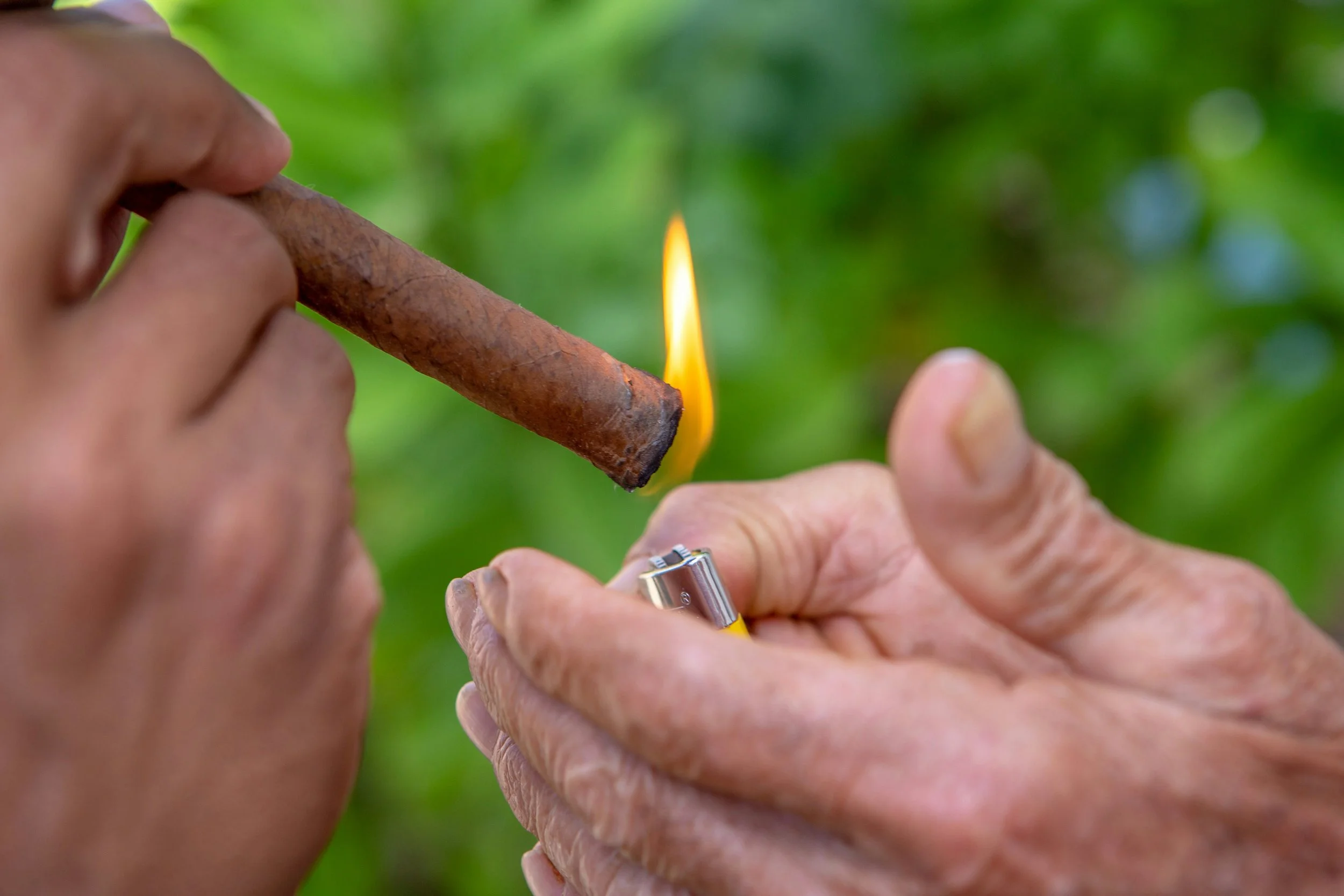
Most people look at a lit cigar and think it’s one simple thing: tobacco burning. In reality it’s a moving little chemical factory, and the “burn” is only the visible tip of the story. A cigar doesn’t just combust. It heats, dries, distills, cracks molecules apart, oxidises what’s left, then cools and condenses a whole cocktail of aromas on the way to your mouth. That’s why two cigars with the same blend can taste different depending on how you light them, how fast you puff, whether there’s wind, and how humid the cigar is. You’re not just tasting tobacco. You’re tasting how the tobacco is being converted into smoke, minute by minute.
When you hear people argue about “smoking too hot,” this is what they’re really talking about. Combustion temperature and oxygen supply decide what reactions dominate. In cigarette research you can actually see coal temperatures jump dramatically during puffs, and even though a cigar is a different animal (bigger, slower, more sidestream-dominant), the same principle holds: puffing drives oxygen in, temperatures rise, reaction pathways shift.
So instead of treating combustion like a black box, I like to break it into phases. Not because we need to turn smoking into homework, but because once you understand the phases, a lot of “mystery problems” stop being mysterious. Tight draw, tunnelling, harshness, bitterness, sudden strength spikes, a cigar that tastes dead until the middle… it all maps back to what the burning end is doing.
The Engine Room: Combustion, Pyrolysis, and Distillation Zones
The burning end of a cigar isn’t one zone. It’s a layered system.
Right at the front is the glowing “cherry,” where you have the most obvious oxidation and combustion. Oxygen is available at the surface, temperatures are at their highest, and carbonised tobacco (char) is actively reacting with oxygen, producing the basic combustion gases like carbon dioxide and carbon monoxide, plus heat that keeps everything moving forward. In scientific descriptions of tobacco burning, this char oxidation / combustion region is the heat source that drives the whole cycle.
Immediately behind that is where the magic—and the trouble—lives: the oxygen-poor zone. Here, tobacco is being heated strongly but not fully combusted. That means pyrolysis and thermal decomposition dominate. Big molecules crack into smaller volatile and semi-volatile compounds. Natural leaf components break down. Sugars and amino compounds can form new aromatic products. A lot of the compounds we associate with “flavour” are born here, not in the bright glowing part. Reviews of smoke formation describe mainstream smoke as coming from a mix of combustion, pyrolysis and distillation processes in and around the coal.
Distillation is the quieter partner to pyrolysis. Not everything needs to chemically break apart to enter the smoke stream. Some compounds are simply volatilised and carried along when the tobacco heats up—basically driven off the leaf like aroma from warming spices. That’s why a cigar can smell unbelievably rich even when it’s burning gently. Those volatiles are being released, transported, and then transformed as they pass through hotter and cooler regions.
And then there’s the part most smokers don’t picture: cooling and condensation. As the smoke travels through the unburned tobacco column toward your mouth, temperatures drop. Compounds condense onto the inner leaf surfaces. Some of what you “lose” becomes tar and residue inside the cigar. Some of what survives becomes the aroma you taste and smell. A recent cigar-focused paper discussing aroma formation explicitly points to pyrolysis, oxidation and condensation processes as part of how cigar smoke aroma compounds form.
This is also where the cigar’s size matters. Bigger ring gauges have more mass, more internal surface area, and a longer internal path for smoke to cool and interact with tobacco before it hits your palate. That can mean a softer, denser, more “rounded” smoke—until it doesn’t. Because the same geometry can also trap moisture and residue, which is why thick cigars can be more sensitive to being stored too wet or smoked too aggressively.
The punchline is simple: your cigar isn’t just “burning tobacco.” It’s running a conveyor belt of reactions. Hot zone creates heat and reactive products. Oxygen-poor zone makes flavour and complexity through pyrolysis and decomposition. Cooler zone filters, condenses, and changes what finally reaches you.
The Two Modes: Smoulder Time vs Puff Time (And Why Your Tempo Changes the Chemistry)
A cigar lives in two different worlds: the time between puffs and the puff itself.
Between puffs, the cigar is mostly smouldering. Oxygen supply is limited, temperatures are lower than during an active draw, and the burn front advances slowly. In cigarette science, this is often described as the “smoulder” phase, and it’s distinct enough that the chemistry and emissions differ from what happens during a puff.
During a puff, you change everything in an instant. You pull fresh oxygen through the burning zone, temperatures rise sharply, gas flow increases, and reactions that were sluggish suddenly accelerate. In published measurements on cigarette coal behaviour, coal temperature can rise quickly during a puff to very high peak values. Again, cigars aren’t cigarettes—but the underlying physics of oxygen + heat is shared.
This puff/smoulder switch is why your smoking cadence matters so much. If you puff too frequently, you keep the cigar in “high-temperature mode” too often. That tends to amplify harshness and bitterness because you’re pushing more high-heat degradation products and you’re also driving more tarry, condensed material down the cigar faster. If you puff too slowly with a cigar that’s too wet or too densely packed, you can struggle to keep the core lit, which leads to relights and uneven burning—also a flavour killer, just in a different way.
It also explains a classic lounge phenomenon: why the first few minutes can taste sharp or “not settled” and then suddenly everything blooms. Early on, the cigar hasn’t established a stable heat gradient. The internal zones are still forming. Once the cigar reaches a pseudo-steady state, the combustion and pyrolysis zones become more consistent and the flavour delivery stabilises. That steady-state idea shows up even in modelling discussions of cigar burning zones.
Now here’s where this becomes practical instead of nerdy. If you’re tasting bitterness, ask yourself first: is this the blend, or is this heat? Because “too hot” isn’t just a vibe. It’s a different chemical regime. If the cigar is scorching your palate, flavours flatten into char, pepper turns sharp, sweetness disappears, and everything feels aggressive. The fix often isn’t a touch-up. The fix is a pause. Let it cool. Let the smoulder phase do some work. Then come back with gentler draws.
Wind is basically forced ventilation, and it can wreck this balance. It feeds oxygen, pushes the cigar toward hotter combustion even when you’re not puffing, and it can make one side of the coal burn differently than the other. That’s why outdoor cigars are harder to judge fairly and why so many “this cigar burns badly” stories magically disappear indoors.
Humidity plays into this too. Water has to evaporate before tobacco can burn efficiently, and that evaporation costs heat. A cigar stored too wet needs more energy to maintain combustion, so you either puff harder (overheating it) or it goes out (and you relight, adding more harshness). This is why so many smokers report that dropping storage RH a few points makes cigars behave better. They didn’t “change the cigar.” They changed the energy balance of the burn.
If you want the cleanest, most flavourful combustion profile, the goal is steady rhythm. Not fast. Not lazy. Just steady enough that the cigar stays lit without being driven into constant high-heat peaks. That’s when the pyrolysis/distillation zone can create and deliver aroma without you cooking it into bitterness.
And once you see combustion this way—zones and phases rather than “burning leaf”—you start realising that a cigar isn’t only judged by its blend. It’s judged by how well it holds these phases together in real life. A truly great cigar is one where the combustion system stays stable, so the flavour has room to speak instead of fighting for survival.