American Tobacco: From Connecticut Shade to Kentucky Fire-Cured — The Leaves That Helped Shape the Cigar World
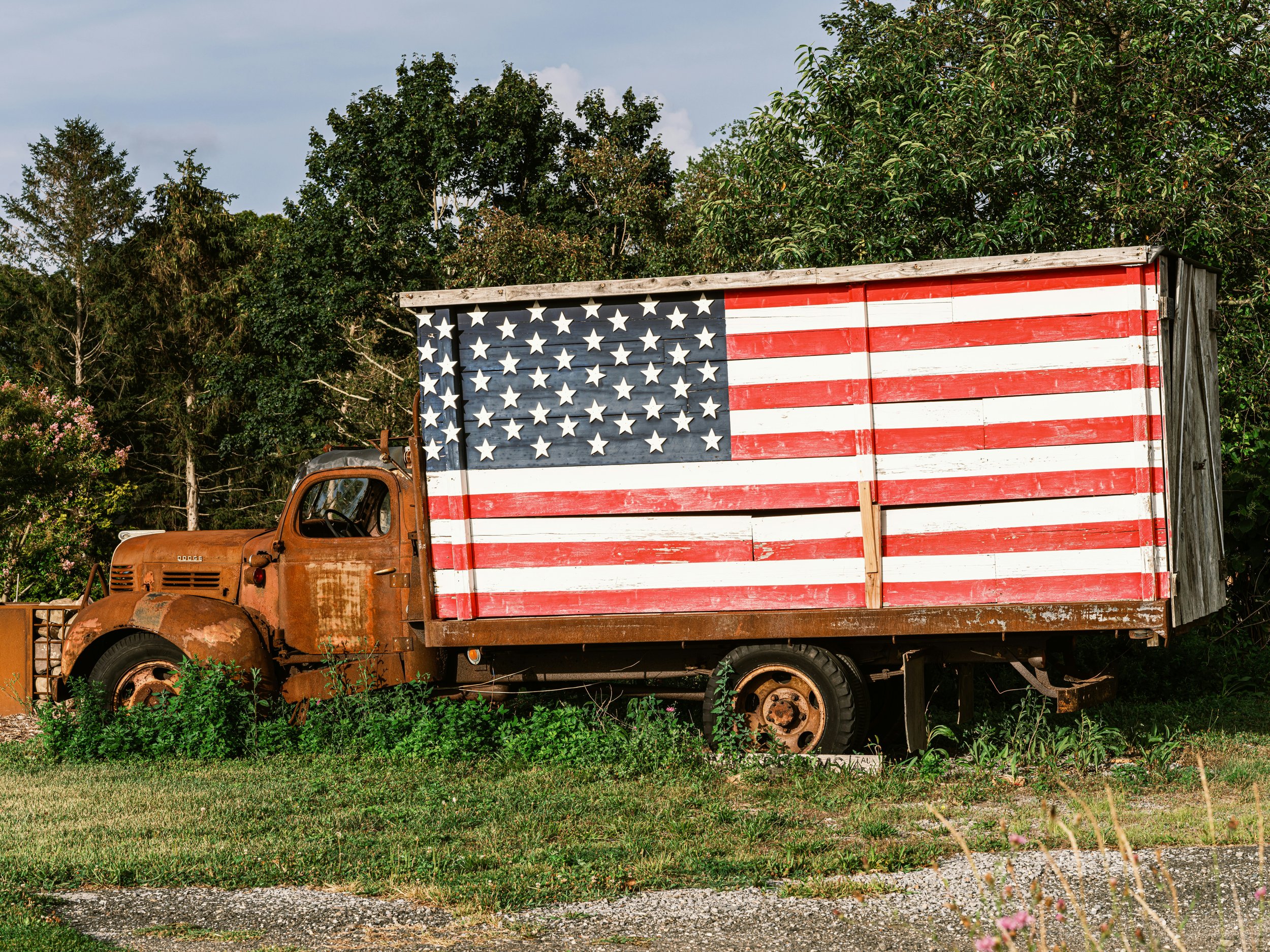
When cigar smokers talk about the great tobacco-producing countries, the conversation usually travels south almost immediately. Cuba comes first for obvious historical reasons, followed by Nicaragua and the Dominican Republic, perhaps Honduras, Ecuador and Brazil. The United States is more likely to enter the conversation because of its enormous cigar market than because of the tobacco growing in its own soil. I have always thought this is slightly unfair, because American tobacco has played a far greater role in cigar history than many modern smokers realise, and some of the leaves grown there remain among the most distinctive and valuable available to a blender.
American tobacco is also difficult to describe with one flavour profile because there is no single "American tobacco." Connecticut alone can produce elegant, delicate wrapper and extraordinarily dark, powerful Broadleaf. Pennsylvania has developed a reputation for thick, earthy, increasingly fashionable tobacco that appears in everything from filler to wrapper. Kentucky gives us something completely different again, particularly when tobacco is fire-cured and takes on that unmistakable smoky character. Virginia, Maryland and several other states belong to the wider history of American tobacco cultivation even when their importance to today's handmade premium cigar is smaller than it once was.
What makes the American story particularly interesting is how much it has changed. Tobacco was once inseparable from the economic development of parts of the United States. Fields stretched across regions that many modern cigar smokers would never associate with premium leaf, and generations of farmers developed highly specialised knowledge around individual varieties. Industrialisation, changing consumer habits, overseas competition, regulation, rising labour costs and the decline of domestic cigarette tobacco have transformed that landscape dramatically. Some famous growing regions contracted almost beyond recognition, while others reinvented themselves around premium cigar tobacco.
And then there is the Connecticut paradox. "Connecticut" has become such a familiar word on cigar boxes that many smokers now use it almost as a flavour category, even when the tobacco was grown thousands of miles from Connecticut. Ecuadorian Connecticut has become enormously important, and in many humidors it is considerably more common than genuine Connecticut-grown wrapper. Yet the original Connecticut River Valley remains one of the most historically important cigar-tobacco regions in the world. Its story alone shows why American tobacco deserves considerably more attention than it usually receives.
Connecticut: Two Completely Different Personalities From the Same Valley
If I had to choose one American growing region that every serious cigar smoker should understand, it would be the Connecticut River Valley. Running through Connecticut and Massachusetts, the valley possesses deep alluvial soils created and replenished over an enormous period of geological time. Tobacco cultivation there stretches back centuries, although the cigar tobaccos that made the region famous developed through changing seed varieties, agricultural experiments and an extraordinary amount of human intervention.
The first thing worth clearing up is terminology. Connecticut Shade and Connecticut Broadleaf are not interchangeable descriptions for tobacco that simply happens to come from the same state. They represent remarkably different approaches to cultivation and produce leaves with almost opposite personalities.
Connecticut Shade became famous for elegance. Historically, growers erected huge structures over the fields and covered them with cloth to filter direct sunlight. Anyone who has seen old photographs of the Connecticut Valley under shade cloth will understand the scale of the operation. Entire fields effectively became enormous outdoor greenhouses. By reducing the intensity of sunlight and altering the microclimate around the plants, growers encouraged leaves to become thinner, smoother, more elastic and finer-veined—exactly the qualities desired in premium wrapper.
Wrapper tobacco has always been a strange agricultural challenge because flavour alone isn't enough. A filler leaf can be ugly and still be extraordinary tobacco. Wrapper has to perform almost perfectly. It needs flavour and combustion, but it also needs elasticity, suitable thickness, relatively fine veins, consistent colour and enough physical beauty to become the first thing a customer sees when picking up the cigar. A small tear, insect bite or cosmetic defect can remove an otherwise excellent leaf from wrapper classification and dramatically reduce its value.
That explains why premium wrapper is expensive to grow anywhere, but traditional Connecticut Shade takes the difficulty further. Shade structures require considerable investment and labour. The plants demand constant attention, and harvesting and curing wrapper-grade leaf requires enormous care. Add American land and labour costs and suddenly the economics become difficult, particularly when another country discovers that nature can achieve something similar without constructing an enormous tent over the field.
That country was Ecuador.
Persistent cloud cover in parts of Ecuador naturally filters the intense equatorial sunlight, creating conditions surprisingly suitable for growing Connecticut-seed wrapper. Manufacturers discovered they could produce smooth, attractive, elastic leaves with many of the qualities associated with traditional Connecticut Shade, often at a considerably more manageable cost. Ecuadorian Connecticut consequently became dominant across much of the modern cigar industry.
This is where the terminology becomes confusing for consumers. A cigar labelled "Connecticut" may contain wrapper grown in Ecuador rather than Connecticut. The word increasingly describes a style as much as a geographical origin: generally lighter in colour, smoother in appearance and associated with a creamier, more approachable flavour profile.
Personally, I think genuine Connecticut Shade deserves to be understood separately. Well-grown examples can offer remarkable subtlety: cream, dry cedar, nuts, gentle sweetness, sometimes hay and a distinctive clean aromatic quality. It is rarely tobacco that screams for attention. Its attraction is refinement, and refinement is something modern cigar culture occasionally undervalues because strength and intensity are easier to recognise immediately.
Then, growing in essentially the same famous valley, we find Connecticut Broadleaf.
If Shade is a tailored dinner jacket, Broadleaf arrives wearing work boots.
Broadleaf is thicker, tougher and visually more rustic. It is grown in direct sunlight rather than beneath shade, developing substantial leaves capable of becoming extremely dark after curing and fermentation. The resulting tobacco can carry enormous flavour: dark earth, cocoa, molasses, coffee, pepper, leather and that dense natural sweetness that makes good Broadleaf immediately recognisable.
Its appearance can be wonderfully imperfect. Veins may be prominent. The surface may be rugged rather than silky. Yet those characteristics have become part of its appeal. Broadleaf doesn't need to look delicate because nobody expects delicacy from it.
For years it existed slightly outside the fashionable centre of premium cigars, but the modern American boutique movement helped transform its reputation. As smokers developed a taste for darker, richer cigars, Connecticut Broadleaf became increasingly desirable. Manufacturers began treating it not merely as an old American tobacco but as a premium ingredient capable of defining an entire blend.
Growing good Broadleaf, however, is not as straightforward as its rugged appearance might suggest. Producing wrapper-grade leaf remains difficult, and supply of genuinely excellent material is finite. Fermentation must also be managed carefully because thick, heavy leaves generate substantial heat in the pilón. Rush that process and the tobacco can remain aggressive and ammoniac. Handle it correctly and the transformation can be spectacular.
I find the contrast between Shade and Broadleaf one of the best demonstrations of how complicated tobacco really is. The same general region can produce one leaf famous for finesse and another famous for power. Geography matters, but seed, cultivation technique, position on the plant, curing and fermentation matter just as much.
American tobacco is already refusing to fit inside a simple box.
Pennsylvania, Kentucky and the Other American Tobacco Stories
Pennsylvania is probably the American cigar-tobacco region that has gained the most attention from modern smokers after Connecticut. The state has a long tobacco-growing tradition, particularly in Lancaster County, where fertile agricultural land and generations of farming knowledge created an industry supplying cigar manufacturers for well over a century.
Pennsylvania tobacco tends to be very different from Connecticut Shade. Leaves can grow large and substantial, with enough strength and body to make them useful as filler and binder, while carefully selected and fermented material can also become wrapper. In flavour terms, I often associate good Pennsylvania tobacco with dark earth, pepper, wood, cocoa and a slightly rustic natural sweetness. Depending on priming and fermentation it can become surprisingly powerful.
This strength is part of what makes Pennsylvania leaf attractive to modern blenders. Premium cigar blending is about structure as much as individual flavours. A blender may have beautiful aromatic tobacco that lacks backbone. Introducing a small proportion of stronger Pennsylvania leaf can change the entire architecture of the cigar without necessarily making "Pennsylvania" the dominant flavour.
It is worth remembering that nicotine concentration and perceived cigar strength are not exactly the same thing. The position of the leaf on the plant, sunlight exposure, agricultural practices, fermentation and the way the leaf is combined with other tobaccos all affect the final experience. Pennsylvania has a reputation for strength, but skilled blending can use that strength with remarkable subtlety.
The resurgence of interest in Pennsylvania also reflects a broader change in cigar culture. Modern smokers are increasingly interested in provenance. They want to know not simply that a cigar contains "American tobacco," but whether it came from Connecticut or Pennsylvania, whether it is Broadleaf, what role it performs in the blend and sometimes even which farm produced it. That curiosity has encouraged manufacturers to talk about American tobacco with the same seriousness previously reserved for places such as Jalapa or Vuelta Abajo.
Kentucky takes the story in an entirely different direction.
Mention Kentucky tobacco to someone familiar with pipes and they may immediately think of fire-curing. In premium cigars, Kentucky fire-cured tobacco occupies a relatively specialised position, but there is nothing subtle about its identity. During curing, the harvested tobacco is exposed repeatedly to smoke from smouldering hardwood fires. Rather than simply drying in moving air, the leaves absorb aromatic compounds from the smoke, producing flavours that can remind people of wood fires, smoked meat, leather, earth and sometimes whisky barrels.
The first time somebody encounters a heavily fire-cured cigar, the aroma can be genuinely surprising. It doesn't smell like a conventional cigar because the curing process has deliberately introduced another aromatic dimension. Used heavily, fire-cured tobacco can dominate almost everything around it. Used carefully, however, it can provide extraordinary depth and a savoury smoky quality difficult to reproduce through ordinary fermentation.
Kentucky's tobacco identity extends far beyond cigars. Historically, dark-fired tobacco became important for chewing tobacco, snuff, pipe blends and other products, and the agricultural techniques surrounding it developed for purposes very different from producing delicate premium wrapper. That history is exactly what makes the leaf interesting when cigar makers experiment with it today. Instead of trying to imitate Nicaragua or Cuba, Kentucky offers something unmistakably its own.
Virginia is another name impossible to ignore when discussing American tobacco, although its connection with modern handmade premium cigars is less direct. Virginia tobacco helped build the early economy of British North America and eventually became globally associated with bright, flue-cured leaf. Its natural sweetness and comparatively high sugar content made it enormously important to pipe tobacco and cigarette production. It generally plays a much smaller role in traditional premium cigars, where air-cured tobaccos dominate, but historically it belongs at the centre of the American tobacco story.
Maryland tobacco deserves mention for similar reasons. Traditional Maryland leaf became known for relatively mild flavour and excellent burning qualities, making it useful historically in cigar and pipe mixtures. Commercial cultivation declined dramatically as agriculture and tobacco markets changed, but its historical importance demonstrates just how geographically diverse American tobacco production once was.
This is something easily forgotten today. We tend to think of premium tobacco through the countries currently dominating cigar manufacturing, but America's tobacco map was once considerably broader. Ohio, Wisconsin, New York, Massachusetts, Florida and other states all participated in cigar-tobacco agriculture at different points, growing wrapper, binder or filler for an enormous domestic cigar industry.
At the beginning of the twentieth century, cigars were not an exotic luxury consumed by a small enthusiast community. They were part of everyday American life, and domestic tobacco supported thousands of farms, warehouses, factories and local economies. Changes in consumer preference, particularly the enormous growth of cigarettes, gradually altered that landscape. Later came international competition, increasing production costs, urban development and changing agricultural priorities.
The tobacco did not disappear completely.
The industry around it changed.
Why American Tobacco Still Matters to the Modern Cigar
What interests me most about American tobacco today is that its importance has become almost inversely related to the amount being grown. The United States no longer needs to produce enormous quantities of cigar leaf to remain influential. Instead, certain American tobaccos survive because they possess characteristics manufacturers struggle to reproduce anywhere else.
Connecticut Broadleaf is probably the clearest example. Growers in other countries have worked with Broadleaf genetics and produced excellent tobacco, but genuine Connecticut-grown Broadleaf continues carrying its own reputation. The combination of seed, soil, climate and traditional processing gives the tobacco a personality sufficiently distinctive that manufacturers continue paying a premium for good material.
That is terroir in its most practical form.
Not romantic language printed inside a cigar box, but manufacturers spending real money to secure tobacco from a particular place because substituting something else changes the cigar.
Pennsylvania increasingly occupies similar territory. Its robust character gives blenders another tool unavailable from softer tobaccos, while growing interest in stronger and more distinctive premium cigars has created opportunities for leaves once considered too rustic for fashionable blends.
American tobacco also tells us something important about the relationship between agriculture and economics. Growing premium tobacco in the United States is expensive. Land is valuable. Labour is expensive. Regulations are demanding. Traditional methods such as shade cultivation require considerable infrastructure. Every acre therefore has to justify itself economically in a way that may be less severe in lower-cost producing countries.
This creates a strange situation where some historically important American tobaccos become more valuable precisely because they are difficult to produce economically.
Scarcity creates demand.
Demand encourages preservation.
But scarcity can also destroy an agricultural tradition if the numbers stop making sense for farmers.
That is why I think supporting genuine American tobacco matters beyond simple patriotism or nostalgia. Once a specialised agricultural tradition disappears, rebuilding it is extraordinarily difficult. Tobacco knowledge isn't stored only in books. It lives in families, farms, curing barns and people who can walk through a field and recognise problems before most of us would notice anything unusual.
Lose those people and you lose something that cannot simply be restarted five years later.
There is another reason American tobacco remains important: diversity.
The premium cigar industry becomes less interesting when every manufacturer chases the same flavour profile. One of the reasons modern cigars are arguably more diverse than at any previous point is the enormous palette of tobacco available to today's blenders. Nicaraguan Estelí can provide strength. Jalapa can contribute sweetness and aroma. Dominican tobaccos can bring elegance and complexity. Ecuador produces extraordinary wrappers. Brazil contributes unmistakable character. Cameroon offers a completely different aromatic profile.
American tobacco adds another set of colours.
Connecticut Shade brings finesse.
Broadleaf brings darkness, sweetness and weight.
Pennsylvania brings earth, strength and structure.
Kentucky fire-cured tobacco brings something almost impossible to mistake for anything else.
That diversity matters because blending is fundamentally about contrast. A cigar made entirely from powerful tobacco can become exhausting. A cigar built entirely around delicate leaf can lack structure. Some of the most interesting blends succeed because apparently incompatible tobaccos are placed together in exactly the right proportions.
This is also why I dislike the tendency to reduce countries to simplistic flavour descriptions. American tobacco isn't necessarily mild because Connecticut Shade is mild. It isn't necessarily strong because Pennsylvania can be powerful. It isn't necessarily sweet because Broadleaf can develop molasses-like richness, nor smoky because Kentucky is fire-cured.
The United States produces tobaccos capable of occupying almost every end of the spectrum. And perhaps that is the most interesting thing about the entire subject. American tobacco isn't one story. It is several completely different stories growing within the borders of one country. One is delicate and hidden beneath acres of shade cloth. Another grows thick and dark beneath direct Connecticut sunshine. Another develops among the farms of Pennsylvania. Another hangs inside Kentucky barns while hardwood fires slowly fill the air with smoke. Each exists because generations of growers discovered that a particular combination of seed, soil, climate and technique produced something worth preserving.
For the smoker, understanding those differences changes the way we approach a cigar. The next time you see "Connecticut" on a box, it is worth asking whether the wrapper actually came from Connecticut or whether it is Connecticut seed grown in Ecuador. When you encounter Broadleaf, look beyond the dark colour and pay attention to the particular sweetness and weight it contributes. When Pennsylvania appears in a blend, notice whether it provides the cigar's backbone rather than its dominant flavour. And if you encounter Kentucky fire-cured tobacco, there probably won't be any need to ask where its influence is hiding. Your nose will usually answer before the first draw.
The more tobacco I learn about, the less interested I become in simply asking whether a cigar is Cuban, Nicaraguan, Dominican or American. Those labels are useful starting points, but they are far too broad to explain what is actually happening inside a blend. What matters is the region, the seed, the farm, the priming, the curing, the fermentation and ultimately what the blender decided to do with the leaf.
American tobacco demonstrates that perfectly.
It has experienced extraordinary highs, enormous decline and an unexpected modern renaissance in premium cigars. Some varieties have almost disappeared while others have become more desirable than ever. Its future will undoubtedly continue changing as costs, climate, consumer tastes and agricultural realities evolve.
But I don't think its importance is disappearing.
If anything, as cigar smokers become increasingly interested in where their tobacco actually comes from, the American story becomes more relevant.
Because behind some of the darkest, sweetest, most elegant and occasionally strangest cigars in our humidors is tobacco grown much further north than most people imagine.
And that is something American tobacco has been quietly doing for centuries.