The Real Reason Boutique Cigars Are So Hard to Scale
Everyone says they want more boutique cigars.
They want more small-batch releases, more unusual blends, more personal brands, more cigars that feel like they were created by a human being rather than a corporate spreadsheet. Then the cigar sells out, the shops get two boxes each, the brand says there is no more tobacco, and everyone complains that the company should “just make more.”
But that is the misunderstanding.
Boutique cigars are not hard to scale because the owners do not want to sell more. Of course they want to sell more. They are businesses, not charities. They are hard to scale because the exact things that make them attractive are usually the same things that prevent them from becoming massive.
A boutique cigar often works because it is built around a very specific tobacco lot, a personal blending idea, a close relationship with a factory, or a production rhythm that can still be watched closely by the people behind the brand. The owner or blender is often directly involved. The tobacco may be limited. The factory space may be limited. The rollers may be limited. The cash flow may be limited. And the moment you try to multiply everything too quickly, the cigar risks becoming something else.
That is the uncomfortable truth of boutique cigars: scaling is not just making more of the same cigar. Scaling often means changing the conditions that made the cigar special in the first place.
Tobacco Is the First Wall Boutique Brands Hit
The easiest way to misunderstand cigar production is to think demand creates supply.
In most industries, if people want more of a product, you order more materials, add more shifts, increase production, and catch up. Cigars do not work like that. The tobacco that made the blend successful may have been grown years ago, fermented for a certain period, aged in a particular condition, and selected from a limited inventory. Once that leaf is gone, it is gone. You can make a new version, but it is not the same cigar.
That is especially true for boutique brands because they often build their identity around tobaccos that larger companies cannot use at scale. Rare wrapper lots, small farm tobaccos, unusual primings, experimental fermentation, old bales sitting in a factory corner — these are perfect for boutique creativity but terrible for mass production. The tobacco may be brilliant, but there may only be enough for a few thousand boxes.
This is why some limited cigars are genuinely limited. Not because the marketing department decided scarcity sounds sexy, but because the leaf cannot be reproduced in the quantities people imagine. Some tobacco is too demanding to grow commercially at huge volume. Some wrapper crops do not yield enough clean leaves. Some filler lots are too small or too old to repeat. Several industry explainers make this point clearly: boutique producers can use rare tobaccos precisely because they do not need to produce millions of cigars, while larger brands often cannot build a core product around leaf that does not exist in reliable volume.
This is where the cigar consumer’s expectations become unrealistic. People want boutique character but mass-market availability. They want rare tobacco, but they also want restocks. They want handmade personality, but they want the same cigar every time, forever, at the same price. Those things fight each other.
Tobacco also changes from crop to crop. Even if the same farm grows the same seed the following year, the weather is different, the curing is different, the fermentation behaves slightly differently, and the leaf ages differently. Large companies can manage that by blending across deep inventories and massive reserves. Boutique brands often do not have that luxury. They may have to work with what they can access, not what they wish existed.
This is why a boutique blend that is incredible in year one can become difficult to repeat in year three. The brand may still use the same recipe on paper, but if the tobacco has shifted, the cigar shifts. A serious producer can adjust and keep the spirit alive, but that requires skill, time, and enough inventory to blend around variation.
And that is expensive.
Good tobacco ties up money for a long time. It has to be bought, cured, fermented, aged, sorted, stored, insured, and protected before it creates a single saleable cigar. Premium tobacco fermentation alone can run through controlled stages over weeks or months, and improper control can damage the tobacco instead of improving it. Ageing adds even more time and tied-up capital. For a small brand, that means growth is not only a sales problem; it is a cash-flow problem.
If a boutique company suddenly doubles demand, it cannot always double aged tobacco. It can only double the pressure on its existing inventory. And that is where shortcuts become tempting: younger tobacco, substituted leaf, looser grading, faster fermentation, bigger production runs before the blend is fully stable. That is how a good boutique cigar becomes an average cigar wearing the same band.
The smart boutique brands resist that temptation. They would rather disappoint people with limited supply than damage the reputation of the cigar. That might frustrate buyers, but it is often the correct decision.
Factories, Rollers, and the Problem of Keeping Quality Human
The second wall is the factory.
Many boutique brands do not own their own factory. They work with factories, often very good ones, but that means they are part of someone else’s production calendar. The factory has other clients, larger contracts, core brands, private labels, export deadlines, events, and limited rolling capacity. A small boutique brand may have passion and demand, but it does not automatically have priority.
That is where scaling gets messy.
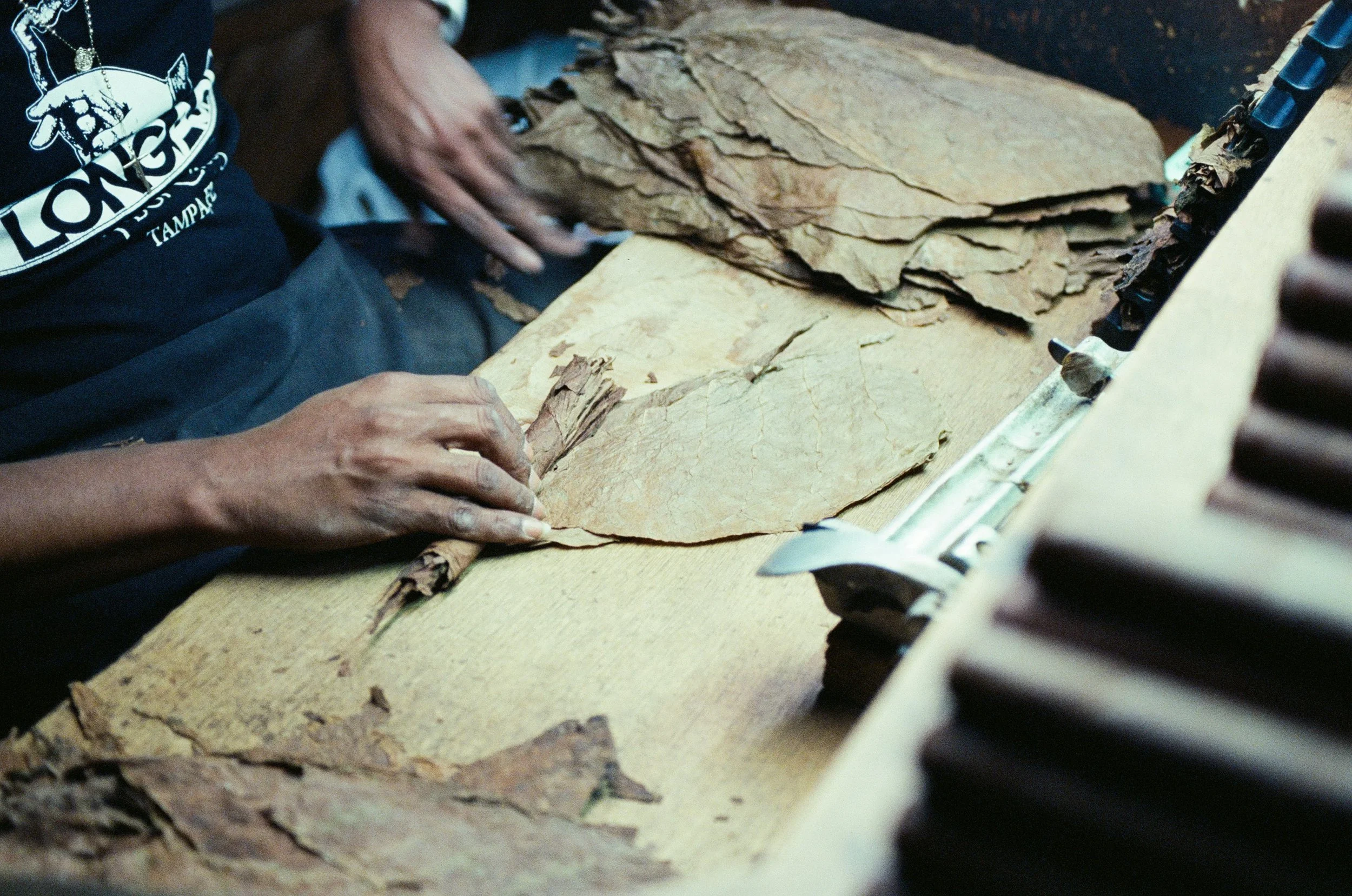
A factory is not just a building full of tables. It is skilled labour, quality control, bunching methods, tobacco preparation, draw testing, packing, ageing rooms, box production, banding, shipping, compliance, and endless small details. Rolling rooms may look like assembly lines from a distance, but each roller or pair is still working by hand, and construction quality depends on their skill and consistency.
That matters because you cannot instantly add experienced cigar rollers. A good torcedor is not created in a week. Even in large Cuban factories, older reporting described daily output as limited by size and complexity, with an average roller producing around 130 cigars a day, and larger formats reducing that number significantly. Whether the exact number changes by factory and method is not the point. The point is that handmade production has physical limits.
Boutique cigars often make those limits worse because they are not always simple robustos with forgiving blends. They may use delicate wrappers, unusual sizes, pigtails, closed feet, box-pressing, perfectos, lanceros, or tobacco that needs careful bunching to draw correctly. All of that slows production or narrows the number of rollers trusted with the cigar.
Then there is supervision. A boutique brand often succeeds because the founder or blender is close to the process. They are smoking test rolls, checking production, arguing over tobacco selection, adjusting details. That closeness is part of the identity. But if production jumps from 50,000 cigars to 500,000 cigars, can the same person still touch the process in the same way? Usually not.
This is where the boutique brand starts becoming a system instead of a personality. That can work if the system is strong. But it changes the nature of the brand.
Quality control also becomes more complicated as volume grows. A small run can be checked closely. A few thousand cigars can be monitored, sampled, and corrected with real attention. Large production requires process discipline, staff layers, and standardisation. That is not bad, but it is different. Boutique brands often live in the space between art and manufacturing. Scaling pushes them harder toward manufacturing.
And sometimes the factory itself becomes the bottleneck. If a boutique cigar is made at a respected factory, demand for that factory’s time may be high. The brand cannot simply say, “Make more next month.” The factory may not have the tobacco conditioned, the rollers available, or the ageing-room space. Even if the brand has orders waiting, production still has to move at the speed of the factory.
This is why some boutique brands struggle when they become popular. They may have created demand faster than they created infrastructure. Retailers want stock. Customers want consistency. Distributors want reliable delivery. The factory wants realistic timelines. The brand owner is stuck in the middle, trying to protect the cigar while everyone asks for more.
There is also a packaging and compliance layer people forget. Boxes, bands, labels, export documents, health warnings, traceability, and market-specific requirements can become serious obstacles for small brands. New compliance systems can hit smaller cigar companies much harder than large ones because the administrative burden was built for industrial-scale tobacco, not tiny premium cigar batches.
So when a boutique brand says supply is limited, it may not mean only “we ran out of cigars.” It may mean the tobacco is limited, the factory time is limited, the rollers are limited, the packaging is delayed, the export paperwork is slow, or the brand cannot afford to tie up more money without risking the whole business.
From the outside, it looks like scarcity.
From the inside, it often looks like survival.
The Real Danger of Scaling: Losing the Cigar That Made People Care
The biggest risk is not that a boutique brand fails to grow.
The biggest risk is that it grows into something nobody originally wanted.
Boutique cigar buyers are not only buying flavour. They are buying identity. They like the idea that the cigar came from a smaller vision, a personal palate, a real blending decision, a tobacco lot that feels specific rather than generic. If the brand scales badly, that identity becomes diluted.
This happens in a few ways.
The first is blend drift. The cigar starts with one tobacco combination, then volume increases, the original leaf runs out, and substitutions begin. Maybe the cigar is still decent. Maybe it is even good. But the smoker notices something has changed. The sweetness is different. The burn is different. The body is thinner. The wrapper looks similar but does not behave the same. Suddenly the cigar that built the reputation is not quite the cigar on the shelf.
The second is overextension. A boutique brand gains traction, then immediately launches too many lines, too many sizes, too many limited editions, too many collaborations. Instead of depth, it creates noise. The market gets confused. Retailers lose focus. Smokers stop knowing which cigar represents the brand. Growth becomes scatter.
The third is price distortion. As demand rises and supply stays limited, prices climb. At some point the cigar moves from “amazing boutique discovery” to “expensive object with expectations it may not meet.” That is dangerous because value is part of many boutique brands’ original charm. Once the price doubles, the cigar has to compete with a different class of expectations.
The fourth is distribution pressure. A small brand may begin by selling through carefully chosen shops that understand the product. As it scales, it may enter markets or channels where the story is weaker, storage is less controlled, or the cigar becomes one more SKU in a crowded humidor. The brand becomes wider but less understood.
This is why the best boutique scaling is slow, almost boring. More tobacco secured before demand explodes. More factory time arranged carefully. More rollers trained gradually. More retailers added selectively. More production without abandoning the original profile. Less panic.
Some people think boutique brands should want to become big brands. I am not so sure. Some should. Some have the structure, tobacco access, and discipline to grow. Others are better staying small and excellent. There is nothing wrong with a cigar that exists in limited quantities if that is the honest size of the idea.
In fact, that may be the whole point.
Not every cigar should be available everywhere. Not every blend should become a core line. Not every small-batch success should be multiplied until it loses its shape. In a world where everything wants to scale, cigars remind us that some things are better when they remain tied to limits.
That does not mean boutique scarcity should be used as an excuse for poor planning or fake exclusivity. Smokers can tell the difference eventually. Real scarcity feels connected to tobacco, production, and quality. Fake scarcity feels like marketing. The market may fall for fake scarcity once, maybe twice, but it rarely builds long-term trust.
The brands that last are the ones honest enough to say: this is what we can make properly. Not what we can sell. What we can make properly.
And that, to me, is the real reason boutique cigars are so hard to scale. They are not limited only by ambition. They are limited by leaf, labour, time, cash, factory space, consistency, and the danger of losing the very thing that made smokers care.
Anyone can make more cigars.
Making more of the same magic is the hard part.