The First Flame: Why Lighting a Cigar Properly Changes Everything
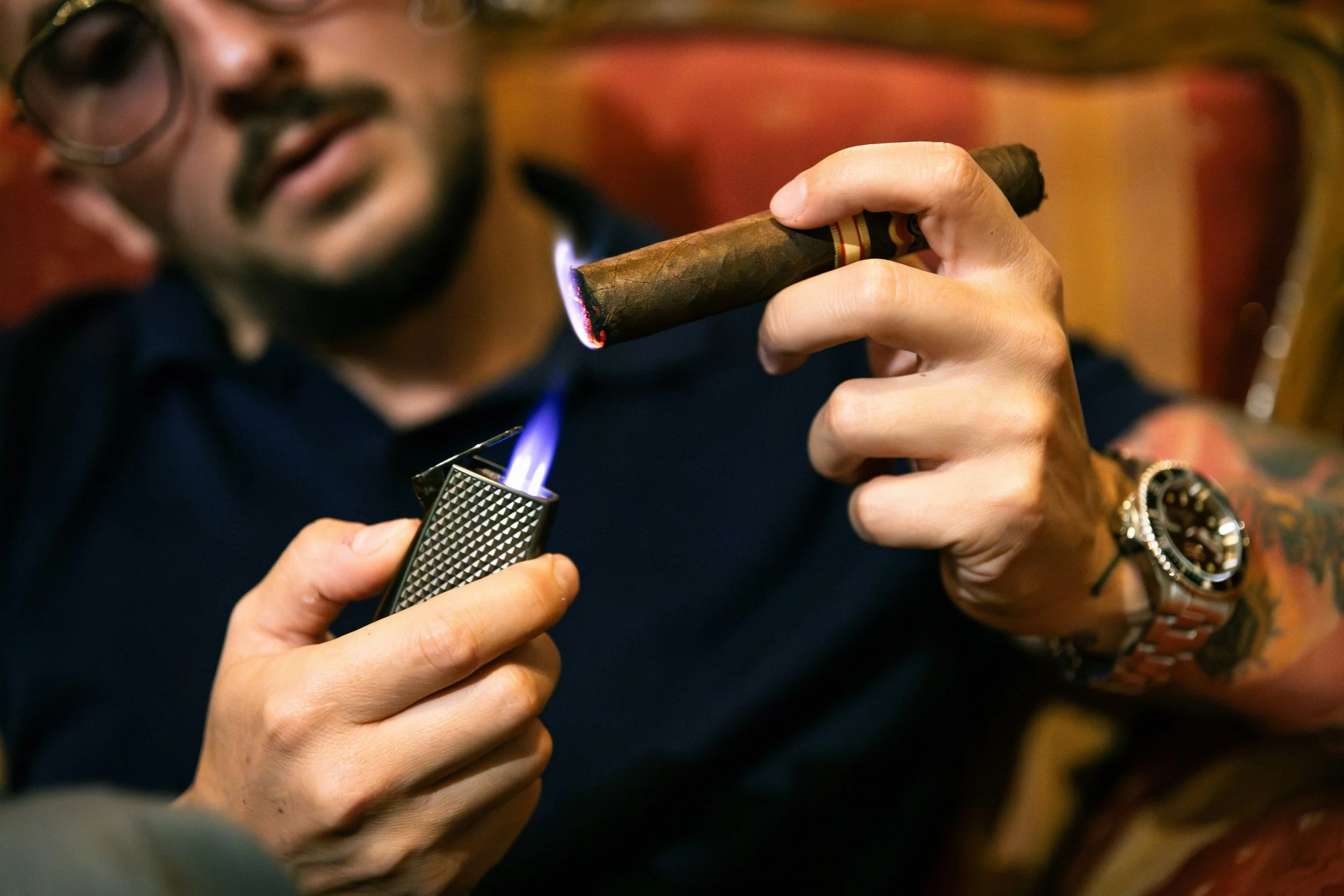
Most cigar problems don’t begin in the last third. They begin right at the start, in that messy little window where you’ve got flame, excitement, and a cigar that hasn’t settled into its rhythm yet. Lighting looks simple on paper, but in real life it’s the highest-risk moment of the whole smoke. Your cigar is cold, the oils are still sleeping, the foot is dry in some spots and slightly damp in others, and you’re asking a handmade bundle of leaf to ignite evenly like it was a machine-built fuse.
That’s why I think of lighting as the danger zone of the whole smoke. Not because lighting is difficult, but because it’s the point where one small mistake can echo for an hour. A crooked light becomes canoeing. A scorched wrapper becomes bitterness that never leaves. An overheated start turns nuanced tobacco into hot, flat smoke. And then people blame the cigar, the brand, the blender, the country… when the real culprit was that first minute.
The truth is, lighting is not just ignition. It’s calibration. You’re setting the temperature, the burn line, and the airflow pattern that the cigar will follow. If you do it gently and evenly, most cigars behave. If you rush it or cook it, you spend the rest of the smoke “fixing” problems you created yourself.
The Classic Lighting Disasters and What’s Really Causing Them
The most common lighting misfortune is the one people don’t even notice at first: an uneven ignition. One side catches properly, the other side is half-lit, and you take your first few puffs thinking everything’s fine. Ten minutes later you’re touching up, rotating, chasing a burn line that never wants to stay straight. This happens because people light the cigar like a candle—one side at a time—rather than like a ring. A cigar burns best when the entire circumference of the foot is evenly toasted and the ember forms as a complete circle. If you start with a “half-moon” cherry, the cigar spends half its life trying to correct it.
Another one is scorching, especially with torches. I’m not anti-torch at all. Torches are useful. The problem is when the flame is too close, too aggressive, and held in one spot. That’s how you get that harsh, bitter, charred taste in the opening that never really disappears. You’ve literally cooked the wrapper and binder instead of gently warming them into combustion. I can describe it as “burnt paper,” “chemical bitterness,” “ashtray flavour” right from the first draws. That isn’t the cigar showing you its personality. That’s you branding the tobacco with heat.
Then there’s wrapper blistering. You see it as little bubbles or lifting on the wrapper near the foot. It looks ugly, and it often predicts an annoying smoke. Blistering usually happens when the cigar is a bit over-humidified or when the heat is too intense too quickly. Moisture trapped in the wrapper expands, the leaf separates, and now you’ve created a weak spot that can burn weirdly. The cigar may start peeling or running unevenly. Even if it still smokes, you’ve damaged the presentation and sometimes the flavour.
A different kind of misfortune is the “false light.” The cigar seems lit, you take a few puffs, it gives you smoke, and then it dies. You relight, it dies again. This is often a moisture and temperature issue. The outer ring is burning, but the core hasn’t properly caught. So the cigar produces a little smoke, then loses oxygen and heat internally, and it goes out like a damp campfire. You’ll see this more with thicker ring gauges, tightly packed cigars, and cigars that have been living too wet. People assume the cigar is defective. Sometimes it is, but often it simply needed a calmer toast and a more patient first minute.
Wind is another underrated killer. Even a mild breeze can make one side burn hotter and faster, or can cool the ember enough that you puff harder to compensate, which overheats the cigar. Outdoors, a perfect light indoors can become a disaster outside. And once you start puffing harder to “keep it lit,” you’re feeding the exact conditions that cause bitterness, tunnelling, and a harsh finish.
One more lighting misfortune that catches newer smokers is damaging the cap or shoulder while trying to light. This happens when someone holds the flame too close to the head while rotating, or when they’re using a torch and the cigar is angled poorly. The heat dries and cracks the head, the wrapper starts unravelling, and now the final third is already compromised before you’ve even reached the middle.
And then there’s the quiet misfortune that doesn’t look dramatic but destroys flavour: overheating the cigar in the first five minutes by puffing too quickly. People do this because they want thick smoke immediately. They want the cigar to “start.” But cigars don’t start like an engine. They warm up. If you force it, you flood the smoke path with hot combustion byproducts and condensed oils early, and the cigar can taste muddy, sharp, or bitter before it ever has a chance to show nuance.
All of these disasters have the same root cause. Heat and airflow weren’t established evenly. The cigar wasn’t allowed to settle into a stable burn.
How I Light to Avoid Trouble and How I Recover When It Still Goes Wrong
My approach to lighting is simple: I’d rather spend an extra thirty seconds at the start than spend the next hour doing repairs. I begin with a gentle toast. Not touching flame to foot like I’m welding steel, but holding the cigar just far enough away that it warms gradually. I rotate slowly, letting the heat kiss the entire edge. I’m looking for an even darkening around the foot rather than a bright flare in one spot.
Then, when I take the first draws, I keep them light and steady. I’m not trying to create a smoke storm. I’m trying to establish an even ember. I rotate as I puff, watching the burn line form into a complete ring. If I see one side lagging, I correct it immediately with a small touch of flame. Early corrections are clean. Late corrections often taste like burnt regret.
If a cigar is acting stubborn, I don’t bully it. If it keeps going out, I pause and let it rest for a minute rather than puffing harder. A lot of cigars that struggle early are simply too moist or too dense and need time to warm evenly. Relighting while it’s still overheated and wet just builds bitterness. A brief rest can reset the temperature and let the cigar behave on the next light.
If I’ve scorched the start and I taste that harsh, burnt edge, I’ll sometimes do a gentle purge. Not aggressively, not like I’m blowing out a candle, but a controlled push of air through the cigar to clear some of the stale, bitter smoke sitting in the core. Then I slow down. A purge doesn’t erase the mistake, but it can stop it from dominating the next ten minutes.
If I realise I’ve got a crooked light and it’s already turning into canoeing, I fix it decisively rather than tapping the flame every two minutes for the rest of the smoke. I touch up the lagging side so the burn line becomes a circle again. If the canoe is severe, I’ll even consider a quick trim just below the worst damage and then relight properly. You lose some length, but you save the rest of the cigar from becoming a constant maintenance job.
If the cigar is tunnelling early, I treat it like a moisture problem first and a lighting problem second. I’ll correct the burn line, then slow down and let the cigar rest more between puffs. If it still tunnels, that’s often the cigar telling you it’s too wet in the core. At that point, the best “fix” might be accepting the lesson and resting the rest of that box a bit drier before you smoke more from it.
And sometimes, the adult move is knowing when to stop trying. If the cigar is plugged, the draw is a fight, it won’t stay lit, and every correction makes it taste worse, there’s a point where you’re no longer smoking—you’re repairing. I don’t mind doing a touch-up here and there, but if the cigar demands constant attention, it’s not doing its job. Put it down. Learn from it. Smoke something else.
Lighting is where you set the tone for everything that follows. Do it calmly and you give the cigar a stage it can perform on. Rush it and you turn the cigar into a problem-solving exercise. The best part is that once you get your lighting discipline right, you’ll feel like you suddenly became “luckier” with cigars. Same brands, same blends, same humidors—just fewer misfortunes, because you stopped creating them in the first minute.