There are few things capable of creating panic among cigar smokers quite as quickly as discovering a tiny hole in a wrapper. You might have spent years building a collection, carefully maintaining humidity, checking temperatures and occasionally opening boxes simply to admire cigars you have absolutely no intention of smoking anytime soon. Everything appears perfectly normal until one afternoon you notice a small, suspicious opening in the side of a cigar. Perhaps there is a little tobacco dust underneath it. Perhaps there isn't. Either way, within seconds your imagination has moved from one damaged wrapper to an entire humidor being consumed by an invisible army of insects. Naturally, the first thing you do is search the internet. And that is where the real trouble begins. Within minutes, somebody tells you to freeze everything. Another insists that any cigar stored above 70°F is practically inviting disaster. Someone else explains that modern manufacturers freeze their tobacco, so beetles are no longer a genuine concern. A collector with several thousand cigars claims never to have encountered a single beetle despite storing everything at relatively warm temperatures, while another smoker describes losing an entire box after discovering one suspicious hole. There are warnings about eggs, larvae, tobacco dust, plastic bags, quarantine periods and the supposedly catastrophic consequences of opening an infected box inside your house.
By the time you finish reading, that one tiny hole has become considerably more frightening than it was when you first discovered it. I have always found the cigar beetle debate fascinating because it combines a legitimate biological problem with decades of inherited advice, questionable assumptions and a remarkable amount of anxiety. Tobacco beetles are real. They can damage cigars, and under favourable conditions an infestation can spread through stored tobacco. There is nothing imaginary about the risk. But the way enthusiasts discuss them often makes it sound as though every cigar contains a dormant insect waiting for the room temperature to rise by a fraction of a degree. That isn't how the biology works. Nor is it particularly helpful when deciding what to do with a suspicious cigar. The familiar advice to maintain a humidor at 70°F and 70% relative humidity has been repeated for so long that many smokers treat it as an established law of tobacco preservation. The numbers appear in old cigar guides, tobacconist recommendations and countless online discussions. Some people still regard 70/70 as the ideal environment for every cigar, while others have moved towards lower humidity and cooler temperatures, partly because of concerns about mould, combustion and beetles. But the relationship between temperature, humidity and insect activity is considerably more complicated than a pair of numbers suggests.
And the modern cigar industry is not the same industry it was thirty years ago. Manufacturing practices have evolved, quality-control systems have improved in many factories, and freezing treatments are used by some producers to reduce the risk of insect contamination. At the same time, cigars continue to be made from agricultural material, handled by people, stored in warehouses and transported through environments that manufacturers cannot always control. So how worried should we actually be about cigar beetles in 2026? I think the answer requires separating three things that are too often mixed together: what the insect is biologically capable of doing, what the modern industry does to reduce the risk, and what an ordinary smoker should reasonably do when faced with a possible infestation. Because there is a considerable difference between taking sensible precautions and treating your humidor like a biological containment facility.
The Tiny Insect Behind the Big Panic
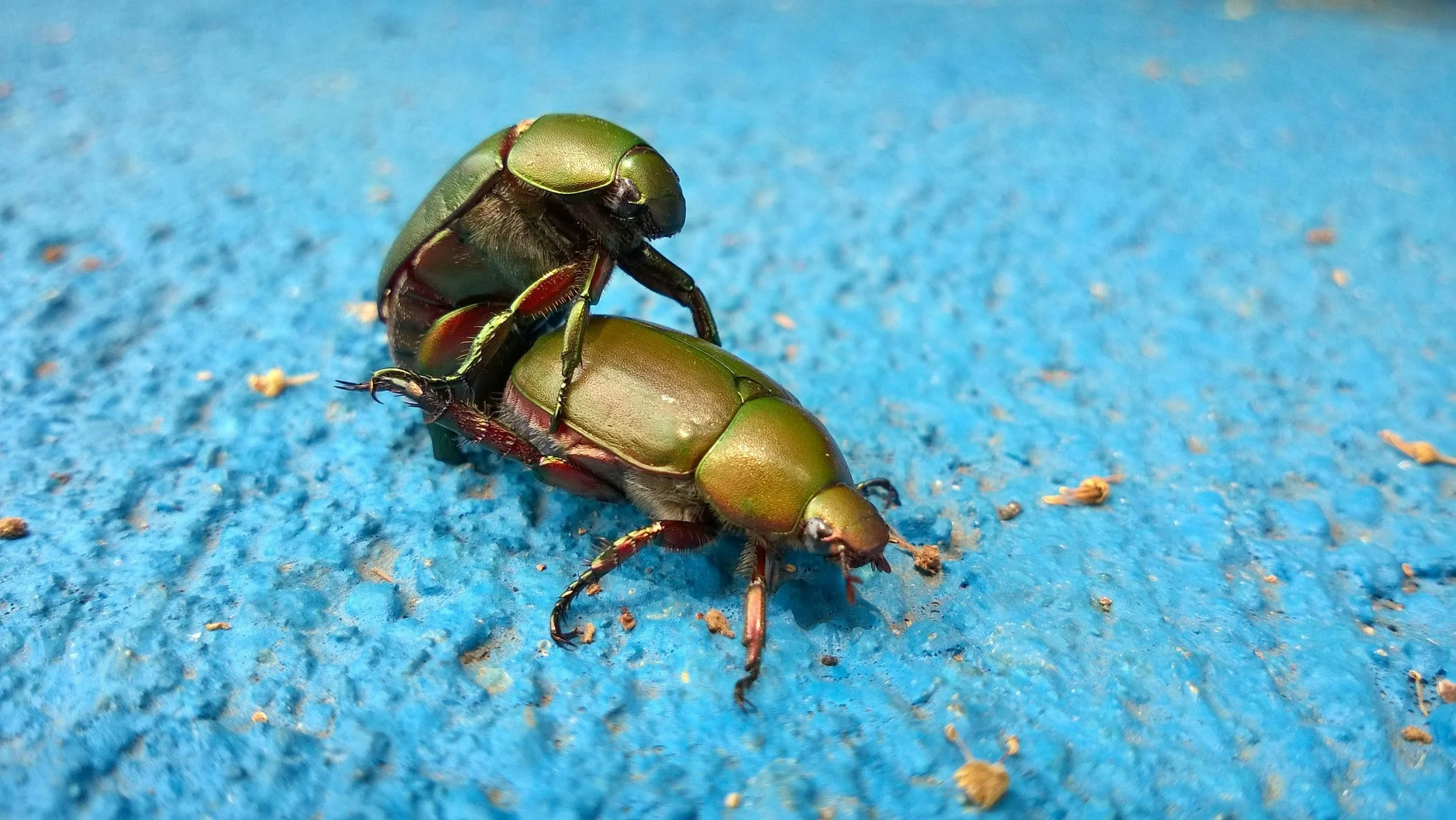
The creature responsible for most of these nightmares is Lasioderma serricorne, commonly known as the cigarette beetle or tobacco beetle. Despite the name, it isn't particularly interested in whether its next meal comes from a cigarette, a cigar or a pile of cured tobacco leaves. It is a stored-product pest that can infest numerous dried materials, including grains, spices, herbs, cocoa and various other agricultural products. Tobacco is simply one of the materials in which it can reproduce successfully. The adult beetle is surprisingly small, generally measuring around two to three millimetres in length. It has a reddish-brown body, a rounded appearance and a head that tends to remain tucked beneath the front section of its body. It isn't a particularly impressive-looking insect, and someone encountering one outside a humidor might not give it a second thought. The problem is what happens before the adult beetle appears. Female beetles lay eggs in suitable materials, including tobacco. The eggs are extremely small and difficult to detect without magnification. Once they hatch, the larvae begin feeding, tunnelling through the material and leaving waste and debris behind. In cigars, this can damage the filler, binder and wrapper, sometimes creating extensive internal galleries before the owner notices anything unusual. The larvae are responsible for much of the destruction. By the time an adult beetle emerges through a neat circular opening in the wrapper, the damage may already have been occurring inside the cigar for weeks.
That small hole is therefore particularly interesting. It is not necessarily the place where an insect entered the cigar. It may be the place where an adult beetle emerged after completing its development. This explains why a cigar can appear perfectly normal for a considerable period before suddenly displaying a suspicious opening. The activity may have been concealed inside the tobacco, beyond the reach of ordinary visual inspection. Under favourable conditions, the beetle's life cycle can progress relatively quickly. Females can produce dozens of eggs, and development from egg to adult may take roughly six weeks to several months, depending upon temperature, humidity and the material available for feeding. Warmer conditions generally accelerate development within the insect's viable range, while cooler conditions slow it considerably. And here we encounter the first major misunderstanding. A beetle egg doesn't possess some biological switch that suddenly activates at exactly 70°F. The relationship between temperature and insect development is gradual and depends on exposure duration, developmental stage and other environmental conditions. Research has demonstrated development at temperatures below the commonly quoted danger threshold, although the process becomes much slower as conditions cool. At sufficiently low temperatures, successful development and reproduction become severely restricted.
This is why temperature management genuinely matters, but the familiar rule that everything is safe at 69°F and dangerous at 71°F is misleading. Biology rarely respects the convenient boundaries we invent for it. Humidity also influences the insect's development. Cigarette beetles generally perform better under relatively warm conditions with sufficient environmental moisture. However, the idea that 70% relative humidity is a precise trigger for infestation is another oversimplification. Humidity doesn't create beetles. If there are no viable eggs, larvae or adult insects present, a warm and humid humidor cannot spontaneously generate an infestation. Conversely, if viable insects are already present, simply lowering humidity slightly doesn't guarantee that they will disappear. This is perhaps the most important distinction in the entire debate. Temperature and humidity influence the ability of beetles to survive and reproduce. They are not the original source of the insects. That source is contamination. And contamination can occur at different points in the tobacco supply chain. Tobacco is an agricultural product. It begins in fields, moves through curing facilities, undergoes fermentation and ageing, enters manufacturing environments and eventually becomes a finished cigar. During that journey, the material may spend considerable time in warehouses and storage areas. Insects can be introduced through infested raw material, contaminated surroundings or contact with other affected products.
Modern factories understand this risk because an infestation is not simply an inconvenience for consumers. It can represent a substantial commercial loss. Imagine a manufacturer storing large quantities of carefully aged tobacco. Some of that material may have required years of agricultural and processing work before becoming suitable for premium production. Losing even a relatively small portion to insects can be expensive. An outbreak in finished inventory creates additional problems involving quality control, reputation, distribution and potential returns. This is why pest management has long been part of professional tobacco handling. Manufacturers and storage operators can use combinations of inspection, sanitation, environmental management, monitoring and approved disinfestation treatments. Freezing is one important method, but it is not the only element of a comprehensive programme. And the existence of these measures is one reason I think modern cigar smokers should approach beetle risk differently from enthusiasts several decades ago. Not because the insect has disappeared. But because the industry has more tools and knowledge available to control it. The difficulty is establishing exactly how widely those tools are used. You will frequently encounter statements claiming that every major New World manufacturer freezes its cigars before distribution. I would be cautious about accepting that as a universal fact. Some manufacturers and supply-chain operators use cold treatment, and commercial processes have been developed specifically for finished tobacco products. But procedures differ between companies, factories and markets, and detailed protocols are not always publicly disclosed.
Freezing raw tobacco is also not necessarily equivalent to freezing every finished cigar. A company may treat leaf at one stage, finished products at another, or rely on a broader pest-management programme. Without verified information from the individual manufacturer, we shouldn't assume that every cigar has undergone an identical treatment. That doesn't make modern quality control meaningless. It simply means we should distinguish documented practices from industry folklore. The science behind freezing is considerably more reliable than the claims about who uses it. Research into cigarette beetles has demonstrated that sufficiently low temperatures maintained for appropriate periods can kill different developmental stages. The challenge is that eggs, larvae, pupae and adults do not necessarily respond identically, and insects that have experienced cooler conditions may develop increased cold tolerance. There is also an important difference between the temperature displayed on a freezer and the temperature reached inside a box of cigars. If a commercial freezer operates at minus eighteen degrees Celsius, that doesn't mean the centre of a densely packed carton immediately reaches the same temperature. Heat must leave the material, and the time required depends upon the packaging, quantity, arrangement and thermal characteristics of the load.
Researchers studying stored tobacco have specifically examined this problem, measuring temperatures within the product rather than relying only on the surrounding freezer air. That distinction matters enormously. A treatment that works for a small quantity of exposed tobacco may not produce the same results when applied for the same duration to a tightly packed commercial shipment. Proper cold treatment is therefore a controlled process, not simply a matter of putting something in a freezer and hoping for the best. And this brings us to the question that interests most collectors: should you freeze your cigars at home? My answer is that freezing can be a legitimate response to a credible infestation risk, but routinely freezing every cigar entering your collection is not automatically necessary. The distinction is between prevention based on evidence and prevention driven by anxiety. If you purchase cigars from reputable retailers, maintain appropriate storage conditions and have no reason to suspect contamination, there is little justification for treating every new acquisition as though it contains living insects. You may choose to take additional precautions, particularly with valuable collections or cigars from uncertain sources, but that is a risk-management decision rather than a universal requirement. If you discover convincing evidence of beetle activity, however, the situation changes.
A single suspicious hole deserves attention, especially if accompanied by fine tobacco debris. Fresh-looking powder beneath a cigar, additional holes appearing over time, visible larvae or small reddish-brown beetles are much stronger indicators than a solitary imperfection in the wrapper. But not every tiny hole is caused by a tobacco beetle. Wrappers can be damaged during handling, rolling, packaging or storage. A small puncture may result from a mechanical defect rather than insect activity. Some natural imperfections can also resemble damage when viewed casually. A classic beetle exit hole is generally small and relatively round, often appearing as a clean perforation. It may be accompanied by fine tobacco dust or other evidence of tunnelling. Multiple similar holes increase suspicion, particularly when they appear on cigars stored together. Even so, visual appearance alone cannot always provide a definitive diagnosis. The sensible response is investigation, not immediate catastrophe. If I discovered a suspicious cigar in my own collection, my first priority would be to separate it from the others. I would inspect the surrounding cigars, the original box and the storage area for additional holes, loose tobacco debris or visible insects. I would also consider where the cigar came from, how long it had been stored and whether the damage was present when I acquired it.
A suspicious cigar can be placed in a transparent, securely sealed container away from the main collection while the situation is assessed. That makes it easier to monitor for activity without leaving potentially affected tobacco in contact with everything else. If there is clear evidence of an active infestation, I would treat it as a genuine pest problem. The affected cigars should remain isolated, and the storage environment should be examined thoroughly. Where a collection is valuable or the extent of contamination is uncertain, advice from a knowledgeable retailer or professional pest specialist familiar with stored tobacco can be worthwhile. I would not begin by spraying insecticide inside the humidor. Nor would I attempt to fumigate cigars with household chemicals. Tobacco is a product that will eventually be heated and placed in the mouth. Improvised chemical treatments create unnecessary risks, and a contaminated humidor may be considerably more difficult to restore than one containing a few damaged cigars. If freezing is selected as the treatment, the temperature, exposure time and packaging need to be appropriate. Published studies of stored tobacco support cold treatment at sufficiently low temperatures, including commercial recommendations around minus eighteen degrees Celsius for a full day after the tobacco itself reaches the required temperature. However, this should not be interpreted as a guarantee that any domestic freezer will successfully treat every box in twenty-four hours.
Household freezers vary in performance, and a tightly packed collection takes time to cool throughout. This is why the common internet advice to freeze cigars for a fixed number of days should be understood as a practical convention rather than an independently verified guarantee for every situation. Sealing cigars in suitable moisture-resistant packaging before treatment is important to limit moisture exchange and condensation. Allowing the sealed cigars to return gradually to room temperature before opening the packaging can help prevent atmospheric moisture from condensing directly onto cold wrappers. The purpose is not to perform some elaborate ritual. It is to control temperature and moisture changes while applying a treatment that has a reasonable chance of reaching the insects. Freezing is not inherently guaranteed to ruin a cigar, but careless handling can damage wrappers or introduce unwanted moisture. Nor does successful freezing repair the tunnels and holes already created by larvae. A badly damaged cigar remains badly damaged even after every insect has been killed. There is another misconception worth addressing: the belief that freezing makes a collection permanently safe. It doesn't. A successful treatment can eliminate insects present at the time, but it cannot prevent future contamination if new infested tobacco or insects are subsequently introduced. This is why commercial pest management relies on ongoing monitoring and good storage practices rather than assuming one treatment provides eternal protection.
A collector who freezes every new cigar but stores the collection in poorly maintained conditions may be concentrating on one risk while neglecting several others. Which brings us back to 70/70.
The 70/70 Myth and What Actually Matters in 2026
The traditional recommendation to store cigars at approximately 70°F and 70% relative humidity has become one of the most persistent ideas in cigar culture. It is easy to remember, sounds reassuringly precise and has been repeated by enough people to acquire the appearance of scientific authority. But it was never a universal biological law. Different cigars can perform well at different moisture conditions, and the appropriate storage environment depends upon factors including tobacco characteristics, storage duration and personal smoking preferences. Many enthusiasts now favour relative humidity levels in the low-to-mid sixties, particularly for cigars they intend to smoke regularly. Temperature also deserves independent consideration. Seventy degrees Fahrenheit is approximately 21°C. That is not an exceptionally high temperature for a room, but it is warmer than ideal if your objective is to strongly suppress cigarette beetle development. Research indicates that reproduction becomes substantially restricted at cooler temperatures, with development failing to complete under sufficiently cool conditions. This doesn't mean every collection must be maintained at refrigerator temperatures. It means that a consistently cool environment can provide an additional layer of protection. For a serious collector with valuable long-term inventory, a properly managed cool storage environment may offer advantages beyond insect prevention. Temperature stability helps avoid rapid environmental changes and can make humidity management more predictable.
But the emphasis should be on stability and sensible risk reduction rather than chasing a magical number. A humidor that briefly reaches 22°C during a warm afternoon has not automatically become infested. A collection maintained at 18°C isn't guaranteed to be free of insects simply because the temperature is lower. And a smoker who maintains 65% relative humidity has not created an invisible barrier that prevents beetles from entering. The risk depends upon whether viable insects are present and whether the environment allows them to survive and reproduce over time. This is where the old advice can become misleading. When smokers are told that beetles hatch above 70°F, they may assume a cigar stored below that temperature is completely safe. When told that 70% humidity is dangerous, they may believe reducing it to 65% eliminates the problem. Neither conclusion is justified. Lower temperatures can slow or interrupt development, and moisture conditions influence survival. But the relationship is not governed by a single on-off threshold. I also think cigar enthusiasts sometimes underestimate the importance of where their cigars come from. A well-established retailer with properly maintained storage, reliable suppliers and good stock management offers a different risk profile from an unknown seller offering poorly documented cigars that may have spent years in questionable conditions.
That doesn't mean reputable retailers are incapable of encountering beetles. They can. Nor does it mean every privately sold cigar is dangerous. But provenance and storage history are meaningful parts of risk assessment. The same applies to older cigars. An aged cigar isn't automatically more likely to contain active beetles simply because it is old. If it has been stored for years without evidence of infestation, that history may be reassuring. However, older collections can have uncertain handling and storage histories, particularly when cigars have passed through several owners. A rare vintage box acquired from an unfamiliar source deserves careful inspection before being introduced into a valuable collection. That is common sense, not paranoia. I would also challenge the idea that cellophane provides reliable protection against tobacco beetles. A sleeve may help prevent wrapper abrasion and reduce direct handling, but it isn't necessarily an insect-proof barrier. Cigarette beetles and related stored-product pests can exploit openings in packaging, and some are capable of damaging certain packaging materials. Likewise, cedar boxes are not magical insect repellents. Spanish cedar has useful properties for cigar storage and can contribute to the familiar aroma of a humidor, but a cedar-lined cabinet should not be treated as a guaranteed defence against tobacco beetles. If viable insects are present and conditions permit development, the presence of cedar doesn't eliminate the biological risk.
This is another example of cigar tradition drifting into mythology. We take a material or technique with genuine benefits and gradually attribute additional powers to it. The same thing happens with freezing. Because freezing can kill beetles, some enthusiasts conclude that every cigar must be frozen. Because temperature influences development, others believe any warm day represents an emergency. Because a beetle can damage an entire collection, a single unexplained hole becomes evidence of a disaster already in progress. These reactions are understandable, particularly when somebody has invested substantial money and years of patience into their cigars. But fear is not the same as effective prevention. A sensible approach begins with maintaining an appropriate storage environment, monitoring temperature and humidity, inspecting unfamiliar acquisitions and paying attention to genuine warning signs. If suspicious evidence appears, isolate the affected material and investigate promptly. If an infestation is confirmed, use an appropriate treatment rather than improvising. That is enough for most collectors. There is no need to open every box daily in search of microscopic enemies. In fact, constant handling creates its own problems. Wrappers can be damaged, humidity stability can be disrupted and the collection becomes an ongoing source of anxiety rather than pleasure.
A humidor is supposed to preserve cigars. It isn't supposed to become a full-time occupation. I also believe we should be careful about interpreting the apparent rarity of beetle infestations. Some smokers have maintained large collections for decades without encountering a single confirmed case. Others have experienced genuine outbreaks despite taking precautions. Both experiences are real, but neither establishes the overall probability of infestation. Anecdotes cannot tell us how frequently beetles occur across the modern premium cigar market. Reliable figures would require consistent reporting from manufacturers, distributors, retailers and consumers, and those data are not readily available in a form that supports sweeping claims. So I wouldn't confidently declare that cigar beetles have become virtually extinct in modern premium tobacco. Nor would I suggest that the average collector is living under constant threat. The evidence supports a more measured conclusion. Cigarette beetles remain a recognised pest of stored tobacco. Their biology is well understood, effective control methods exist, and modern supply-chain practices can reduce exposure. Yet the risk has not been eliminated, and conditions still matter. For most enthusiasts, the appropriate response is awareness rather than obsession. There is also something slightly absurd about the way we discuss beetles compared with other cigar problems. We worry endlessly about a hypothetical insect infestation while sometimes ignoring storage conditions that are already affecting the tobacco. A cigar kept too wet may burn poorly, draw tightly or develop undesirable characteristics. A cigar kept too dry may become brittle and lose the smoking qualities we wanted to preserve. Excessive temperature fluctuations can complicate moisture management.
Those are problems that can affect a collection without a single beetle ever appearing. Yet they rarely produce the same level of panic as one suspicious pinhole. Perhaps because beetles are visible enemies. We can imagine them moving through our expensive cigars, creating tunnels and destroying something we have spent years collecting. Humidity imbalance is less dramatic. Poor storage rarely produces a photograph as shocking as a cigar with several neat holes through its wrapper. The emotional reaction is understandable. But the practical response should still be proportional to the evidence. If there is one thing I would like cigar smokers to take away from the modern beetle discussion, it is that prevention and treatment should be based upon biology rather than inherited slogans. The old 70/70 rule may have provided a convenient starting point for cigar storage, but it doesn't adequately explain insect development. Freezing can be effective, but its success depends upon temperature, duration and the conditions inside the treated material. Modern manufacturers may use sophisticated pest-control procedures, but we shouldn't assume every factory follows the same protocol. A small hole can indicate beetle activity, but not every wrapper imperfection is evidence of infestation. And discovering a genuine problem doesn't automatically mean the entire collection is lost.
The earlier an infestation is identified, the better the opportunity to isolate affected cigars and prevent further damage. That is why occasional inspection and sensible monitoring are worthwhile. But once the collection is properly maintained and there is no evidence of trouble, I see little benefit in continually worrying about insects that may not be there. The cigar industry has enough genuine challenges without enthusiasts inventing additional emergencies. Tobacco remains a natural agricultural product, and natural products carry biological risks. We cannot eliminate every possibility of contamination, manufacturing defects or storage problems. What we can do is understand those risks, reduce them where practical and respond intelligently when something actually happens. That, to me, is the sensible position in 2026. Beetles deserve respect because they can cause real damage. They don't deserve to dominate the way we enjoy cigars. So the next time you discover a tiny hole in a wrapper, don't immediately assume your entire humidor is doomed. Inspect the cigar, look for supporting evidence, isolate anything suspicious and make a decision based on what you actually find. And if your cigars are healthy, your storage conditions are stable and nothing suggests an infestation, perhaps the best thing you can do is close the humidor, select something enjoyable and stop worrying about what might be hiding inside it.
After all, the cigar was made to be smoked. Not interrogated.