Sensation Aromas: How a Cigar Speaks to Your Nose
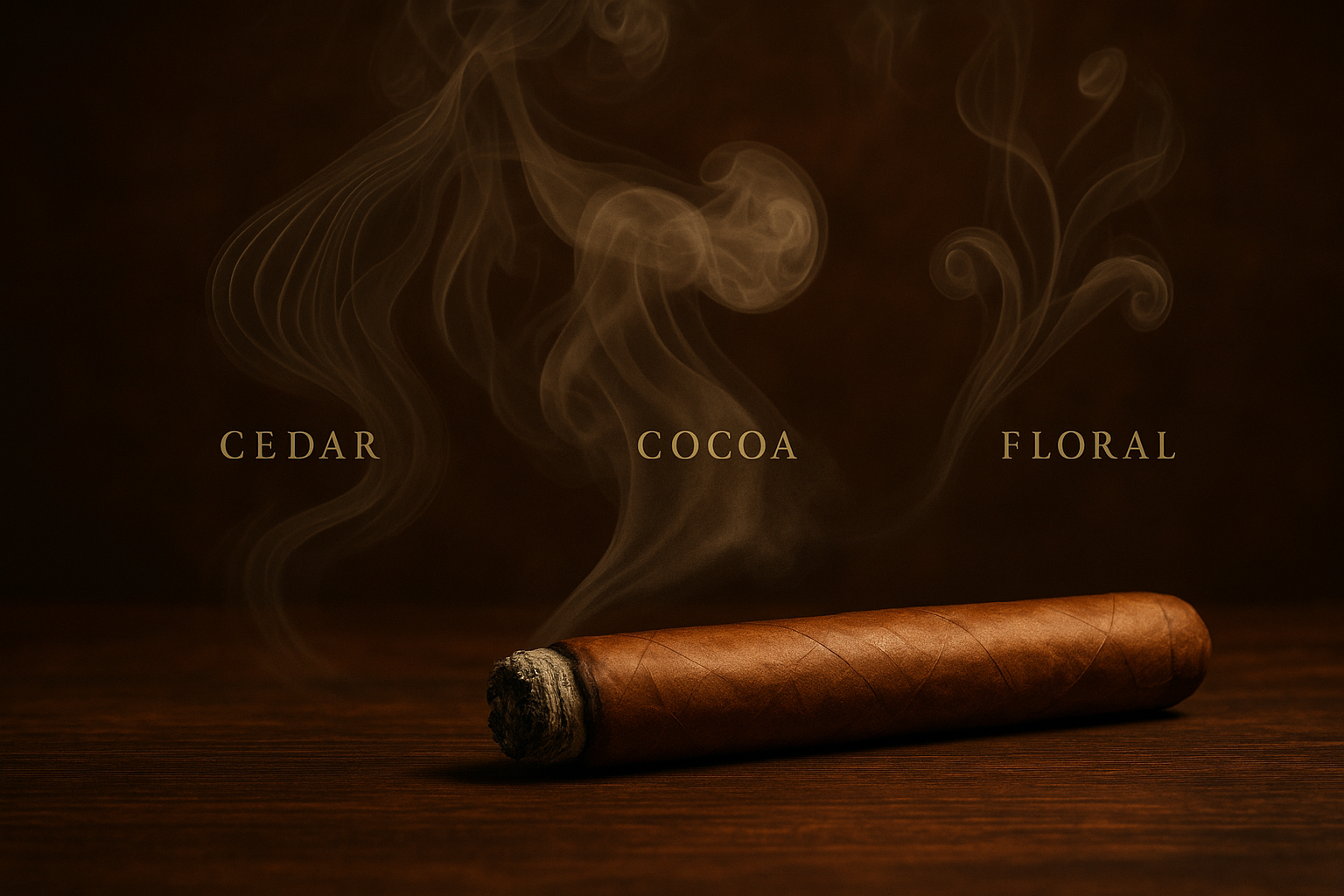
When I say “sensation aromas,” I’m talking about everything your nose picks up before, during and after a cigar – not just flavour notes on a wheel, but the whole physical sensation of aroma. With cigars, taste on the tongue is actually the small part of the story. Sweet, salty, sour, bitter, umami – that’s it for taste. Everything else we describe as cocoa, cedar, leather, honey, barnyard, citrus, pepper, flowers, nuts… that’s aroma. And cigars are built to talk to your nose. Studies on flavour perception make it very clear that cigar enjoyment is mostly a duet between smell and touch in the mouth, not just taste alone.
You experience those aromas in two main ways. First is the obvious one: smelling the foot of the cigar, the wrapper, the room note, the smoke drifting past your face. That’s “orthonasal” smell – nose doing its usual job. The second is the more interesting one: retrohaling. When you hold smoke in your mouth and gently let some of it exit through your nose, you’re sending the cigar’s volatile compounds up the back passage between throat and nasal cavity. That’s where the real magic happens. A lot of subtle aromas – light florals, delicate spices, dried fruit, herbaceous notes – barely show up if you only puff and exhale through the mouth, but they light up as soon as you retrohale. Quite a few cigar people now consider this the only way to really “taste” a cigar in full, and sensory work on smoking backs that up: block the nose and satisfaction, “taste” and puff volume all drop.
Under the hood, aroma is simply chemistry leaving the leaf. Tobacco is loaded with carbohydrates, amino acids, organic acids, pigments and isoprenoid compounds that can all turn into aroma molecules when the leaf is cured, fermented, aged and finally burned. Some of the most important contributors identified in cigar studies are Maillard reaction products and pyrazines (roasted, nutty, coffee, toast), phenolics (woody, smoky, leathery), and compounds derived from carotenoids and terpenes (floral, fruity, honeyed, tea-like). When people talk about top notes of hay and fresh bread on the cold draw, cocoa and nuts in the middle, and darker charred sweetness in the final third, they’re describing different sets of these molecules hitting the nose as the cigar warms up, dries out and the burn line moves through the blend.
To keep all of that vaguely organised, it helps to think in aroma “families” instead of chasing hyper-specific descriptors. Most flavour wheels for cigars are built around the same core groups because that’s what objective sensory panels and chemical analysis keep finding: natural and earthy notes (hay, soil, barn, musty cellar), wood and plants (cedar, oak, tea, grass), spice (black pepper, baking spice, chilli), sweet tones (honey, caramel, vanilla, molasses), nuts (almond, walnut, peanut), floral and herbal hints (chamomile, dried flowers, mint), and fruit or dessert notes (dried fig, citrus peel, cocoa, coffee). Once you recognise those main “families,” the job gets easier: instead of panicking over whether it’s hazelnut or cashew, you just call it nutty and move on. The detail comes later.
There’s also an actual structure to how aromas show themselves over the life of a cigar, a bit like a perfume pyramid. The cold aroma and the first few puffs are where the top notes live: fresher hay, grass, bright spice, light sweetness from the wrapper. The main section of the cigar – the second third that seems to last forever when things are going right – is where you get the “heart notes”: woods, bread, nuts, cocoa, coffee, earth. Toward the end, the “base notes” take over as the cigar heats up the densest parts of the bunch: deeper char, leather, darker roasted tones, sometimes a bit of incense or tar if you push it too hard. Good blending and good combustion are what make that journey feel like a progression rather than a train wreck.
The tongue still has a role here, but mostly as a judge of balance and mouthfeel rather than flavour detail. The five basic tastes ride underneath the aromas: sweetness softens everything, acidity or sourness brightens, bitterness and tannin provide structure, saltiness can sharpen perception, umami adds savoury depth. At the same time, there are pure sensations that aren’t tastes at all: dryness, creaminess, pepper tingle, temperature. Those are tactile signals picked up by the nerve endings in your mouth and throat. When you say a cigar is creamy, you’re describing an aroma profile plus a smooth, fine-textured smoke that doesn’t scratch. When you say it’s sharp or aggressive, you’re feeling harsh compounds and higher temperature on the palate, not just “strong flavour.”
One thing people often underestimate is how much the environment bends aroma. Humidity, temperature, what you’ve eaten, even the time of day will change how a cigar’s aromas register. Sensory work on tobacco shows that the same leaf can be perceived very differently depending on the panel’s training, context and even what reference materials they’ve just smelled. A cigar that feels heavy and earthy in a closed indoor room might come across as cleaner and more floral if you smoke it outside with a bit of breeze; a cigar that tasted sweet and rounded after dinner can feel flat and bitter first thing in the morning. There’s nothing mystical about that – your nose is constantly adapting, and your brain is comparing what you smell now with a library of scents you’ve picked up over years.
That “aroma memory” is where the fun starts if you actually train it. Professional tasters don’t have superhuman noses; what they have is practice. They’ve built mental links between certain groups of molecules and familiar references: toast, orange peel, black pepper, wet soil, leather, roasted nuts. Scientific work on cigar and tobacco aroma has even identified some of those links explicitly – for example, pyrazines line up with roasted, nutty impressions, while certain aldehydes lean green or fruity, and specific terpenoids push floral or citrus. You don’t need the chemistry in your head, but it’s useful to know that when you smell toast and nuts, your nose is responding to a real family of compounds that tend to travel together.
If you want to improve your own sense of “sensation aromas,” simple habits go a long way. Smell the cigar at every stage: dry wrapper, open foot, cold draw, first smoke, mid-point, final third, the room note after you’ve set it down. Take tiny retrohales rather than blowing half the smoke through your nose in one go; you’ll notice more detail and irritate your sinuses less. Change only one variable at a time when you’re learning – same cigar, different drink; or same drink, different cigar – so you can see what really changed. And, importantly, write it down in simple language. Instead of chasing clever adjectives, stay with those basic families: more earthy than woody; more sweet than spicy; nutty moving into cocoa; floral fading into tea and hay. Over a few months you’ll start to see patterns in what you enjoy and how certain origins or wrappers tend to behave aromatically.
There’s also the emotional side of aroma, which is harder to measure but just as real. A certain barnyard note might remind you of visiting farms as a kid; a cedar-and-incense cigar might feel “churchy” or meditative; a sweet, bakery-like aroma might instantly feel comforting. Neuroscience and sensory research tell us that smell is deeply wired into memory and emotion pathways, which is why one whiff of a particular cigar can take you straight back to a specific trip or evening. When people talk about a cigar having “soul” or “nostalgia in the aroma,” that’s what they’re really describing: a bundle of volatile compounds hitting an old memory at just the right moment.
In the end, sensation aromas are the real language a cigar uses. The band, the box, the story – all of that is decoration around what’s happening in your nose. The more you pay attention to that side, the more cigars open up. You start to understand why two blends with similar strength can feel completely different, why some cigars reward slow, thoughtful smoking and others are happier as background company, and why the same cigar can charm you one night and leave you cold another. It isn’t random. It’s just your nose doing what it’s built to do: turning smoke into sensation, chemistry into experience, and one more hour with a cigar into something that feels like it actually meant something.